Rumba Walk Tutorial (BEST TUTORIAL EVER) by Oleg Astakhov #olegastakhov
Summary
This video tutorial focuses on developing body weight movement as the core of dancing, emphasizing it over isolated footwork. It breaks down body mechanics from feet to arms and posture, then integrates these into fluid body weight transfer. The central thesis is that mastering body weight movement, guided by the spine and leading the legs, creates a powerful and connected dance, applicable across various styles.
Key Insights
Drills are crucial for reprogramming the body's unconscious mind.
Learning through repetitive drills is essential to reprogram the unconscious mind, which is the body's memory, rather than just intellectual understanding.
Rib cage movement creates diagonals and is vital for body weight transfer.
The rib cage can pop forward and collect. This action creates a diagonal line between the rib cage and hip. Mastering rib cage movement is crucial for understanding and executing body weight transfer, akin to the power generated in martial arts.
Proper dance posture involves 'Tummy in, chest forward, knee back' for stability and action.
A good dance posture involves engaging the core ('tummy in'), lifting the chest up and forward, and pressing the knees slightly back. This creates a stable base that allows for all the other body actions to be performed effectively.
Body weight movement, driven by the spine, is the true engine of dance.
The most crucial element in dancing is not footwork or isolated muscle actions, but the movement of body weight, primarily guided by the spine. Imagine the spine as a line that can be moved in any direction to create movement and off-balance.
The fundamental formula for steps is 'body first, then leg'.
When executing any dance step, the body's weight and movement should initiate the action, followed by the leg. This contrasts with merely moving the leg independently.
Steps are reactions to the body's fall or momentum, not independent actions.
A step should be a reaction to the body's movement or 'fall', guided by body weight and actions like rib cage movement, rather than being the primary action itself. This creates a smoother, more connected flow.
Projecting body weight forward enables future steps and seamless transitions.
By projecting body weight forward, even in backward steps, dancers prepare for subsequent movements and connect with the music's rhythm, avoiding abrupt stops and creating continuous flow.
Learn body weight movement by first understanding the rest of the body parts.
The most important aspect of dancing, regardless of style, is learning to move body weight. This is achieved by first understanding and practicing movements of individual body parts.
Feet: Natural turnout and controlled landing are key for footwork.
For Latin rhythm dances, maintain a natural turnout. Practice controlled landings, where the heel is placed down deliberately rather than just dropping. This involves feeling the elevation on the ball of the foot and controlling the descent.
Knee action involves controlled bending and straightening, crucial for smooth movement.
Knees can bend and straighten. Awareness of this action and the speed at which it occurs is important. This includes brushing action where one knee bends while the other straightens, with the thighs potentially meeting to avoid a hole, especially important for ladies in skirts.
Hips provide rotation, compression, and pendulum actions for dynamic movement.
Hip movements include rotation (like wringing a towel), compression (shoulder blade and hip meeting, with hip going up and shoulder down, like pulling something), and pendulum action (swinging side to side like a clock pendulum). These can be combined.
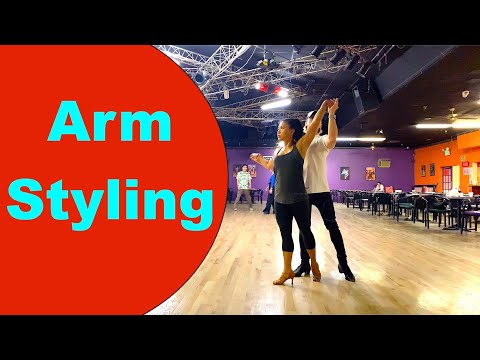
Arms move using a shoulder-elbow-wrist sequence for fluidity and control.
Arm movements follow a sequence: shoulder, then elbow, then wrist. This applies both when bringing arms in and opening them out. For advanced levels, the opposite shoulder can initiate the movement for greater control and range.
Move body weight by shifting the spine from side to side, back to front, and in circles.
Practice moving the spine from right to left, back to forward, and in circular patterns. This creates significant volume and movement without relying on leg actions, demonstrating the power of body weight transfer.
Body weight transfer creates natural reactions in other body parts, like the hips.
When body weight is shifted from foot to foot, the hips naturally respond with movement, like a pendulum action. This illustrates the principle of action and reaction in dance, where one movement naturally leads to another.
Use feet to push and initiate body weight movement if direct transfer is difficult.
If direct body weight transfer is challenging, use the feet to push off and help initiate the movement. This helps experienced dancers feel the body weight shift more readily.
Rocking motions between legs help shift body weight and engage the entire skeleton.
Performing rocking motions from the middle position to over each leg helps in shifting body weight and makes the entire skeleton move. This can be assisted by pushing off the back foot if needed.
Proper landing occurs 'in between legs' to maintain balance and continuity.
When stepping, it's important to land in a split weight position, between the legs, rather than too far over one leg. This allows for continuous movement and maintains control.
Activating the spine and opposite side actions helps initiate movement and keep momentum.
To initiate steps, engage opposite side body actions that push the spine towards the direction of movement. This helps maintain momentum and prevents the legs from moving independently.
Backward steps require the body weight to be projected forward to enable the step.
When stepping backward, the body weight should be projected forward. This allows for a controlled step backward by transferring weight and then driving the spine forward to bring the trailing leg through.
Continuous projection and minimized stopping are key, especially in faster music.
In fast music, the goal is to never stop. Body weight guidance allows for continuous motion, with movements like the Rumba walk demonstrating how to 'float' by always projecting forward.
Connecting with a partner relies on delivering and receiving power through body weight.
Partner connection is established not through fantasy but through the real movement of body weight, enabling dancers to deliver and feel power dynamically.
Sections
Foundation: Understanding the Body
Learn body weight movement by first understanding the rest of the body parts.
The most important aspect of dancing, regardless of style, is learning to move body weight. This is achieved by first understanding and practicing movements of individual body parts.
Feet: Natural turnout and controlled landing are key for footwork.
For Latin rhythm dances, maintain a natural turnout. Practice controlled landings, where the heel is placed down deliberately rather than just dropping. This involves feeling the elevation on the ball of the foot and controlling the descent.
Drills are crucial for reprogramming the body's unconscious mind.
Learning through repetitive drills is essential to reprogram the unconscious mind, which is the body's memory, rather than just intellectual understanding.
Knee action involves controlled bending and straightening, crucial for smooth movement.
Knees can bend and straighten. Awareness of this action and the speed at which it occurs is important. This includes brushing action where one knee bends while the other straightens, with the thighs potentially meeting to avoid a hole, especially important for ladies in skirts.
Hips provide rotation, compression, and pendulum actions for dynamic movement.
Hip movements include rotation (like wringing a towel), compression (shoulder blade and hip meeting, with hip going up and shoulder down, like pulling something), and pendulum action (swinging side to side like a clock pendulum). These can be combined.
Rib cage movement creates diagonals and is vital for body weight transfer.
The rib cage can pop forward and collect. This action creates a diagonal line between the rib cage and hip. Mastering rib cage movement is crucial for understanding and executing body weight transfer, akin to the power generated in martial arts.
Arms move using a shoulder-elbow-wrist sequence for fluidity and control.
Arm movements follow a sequence: shoulder, then elbow, then wrist. This applies both when bringing arms in and opening them out. For advanced levels, the opposite shoulder can initiate the movement for greater control and range.
Proper dance posture involves 'Tummy in, chest forward, knee back' for stability and action.
A good dance posture involves engaging the core ('tummy in'), lifting the chest up and forward, and pressing the knees slightly back. This creates a stable base that allows for all the other body actions to be performed effectively.
Core Principle: Mastering Body Weight
Body weight movement, driven by the spine, is the true engine of dance.
The most crucial element in dancing is not footwork or isolated muscle actions, but the movement of body weight, primarily guided by the spine. Imagine the spine as a line that can be moved in any direction to create movement and off-balance.
Move body weight by shifting the spine from side to side, back to front, and in circles.
Practice moving the spine from right to left, back to forward, and in circular patterns. This creates significant volume and movement without relying on leg actions, demonstrating the power of body weight transfer.
Body weight transfer creates natural reactions in other body parts, like the hips.
When body weight is shifted from foot to foot, the hips naturally respond with movement, like a pendulum action. This illustrates the principle of action and reaction in dance, where one movement naturally leads to another.
Use feet to push and initiate body weight movement if direct transfer is difficult.
If direct body weight transfer is challenging, use the feet to push off and help initiate the movement. This helps experienced dancers feel the body weight shift more readily.
Rocking motions between legs help shift body weight and engage the entire skeleton.
Performing rocking motions from the middle position to over each leg helps in shifting body weight and makes the entire skeleton move. This can be assisted by pushing off the back foot if needed.
Application: Body Weight Guiding Steps
The fundamental formula for steps is 'body first, then leg'.
When executing any dance step, the body's weight and movement should initiate the action, followed by the leg. This contrasts with merely moving the leg independently.
Steps are reactions to the body's fall or momentum, not independent actions.
A step should be a reaction to the body's movement or 'fall', guided by body weight and actions like rib cage movement, rather than being the primary action itself. This creates a smoother, more connected flow.
Proper landing occurs 'in between legs' to maintain balance and continuity.
When stepping, it's important to land in a split weight position, between the legs, rather than too far over one leg. This allows for continuous movement and maintains control.
Activating the spine and opposite side actions helps initiate movement and keep momentum.
To initiate steps, engage opposite side body actions that push the spine towards the direction of movement. This helps maintain momentum and prevents the legs from moving independently.
Backward steps require the body weight to be projected forward to enable the step.
When stepping backward, the body weight should be projected forward. This allows for a controlled step backward by transferring weight and then driving the spine forward to bring the trailing leg through.
Projecting body weight forward enables future steps and seamless transitions.
By projecting body weight forward, even in backward steps, dancers prepare for subsequent movements and connect with the music's rhythm, avoiding abrupt stops and creating continuous flow.
Continuous projection and minimized stopping are key, especially in faster music.
In fast music, the goal is to never stop. Body weight guidance allows for continuous motion, with movements like the Rumba walk demonstrating how to 'float' by always projecting forward.
Connecting with a partner relies on delivering and receiving power through body weight.
Partner connection is established not through fantasy but through the real movement of body weight, enabling dancers to deliver and feel power dynamically.
Ask a Question
*Uses 1 Wisdom coin from your coin balance