기분 나쁜 걸 온몸으로 티 내는 사람과의 소통법? 같은 실수를 반복하는 사람의 심리? 심리 특별 QnA 2편 [타인의 심리 읽어드립니다 EP.20] | 김경일 교수
Summary
This video explores common, perplexing human behaviors viewed from the perspective of cognitive psychology. It addresses why people repeatedly make the same mistakes, the psychology behind blunt and potentially offensive communication, and why individuals might mimic behaviors they dislike in others. The core message emphasizes understanding these actions as a result of cognitive processes and suggests strategies for managing such interactions by focusing on follow-up actions, communication styles, and reframing perspectives.
Key Insights
Repetitive mistakes stem from a failure to encode reflections into memory, not a lack of remorse.
When individuals repeatedly make the same mistakes and apologize, it's because they fail to truly process and encode the reflection or the learning experience into their memory. They remember the act of making the mistake but not the subsequent reflection or apology. To break this cycle, concrete follow-up actions are crucial, turning the apology into a commitment that is immediately acted upon, thereby creating a memory of the corrective behavior.
Blunt or rude responses often indicate a lack of skill in indirect communication and an underlying tendency towards anger.
People who respond very directly and make others uncomfortable, such as saying 'I'll carry it myself' when asked if they want a bag, or responding sarcastically to a simple question like 'hot or cold coffee on a cold day', often lack proficiency in indirect communication or 'figure of speech' (은유법). This directness can stem from a general tendency towards anger, where they are quick to react negatively because they are easily provoked. They may feel less compelled to be polite or considerate if they perceive no social benefit or if they are feeling generally irritable. Offering options that are not 50/50, but rather frame what others typically do, can help mitigate this.
Employees who outwardly display displeasure create discomfort by seeking validation and control, and can be managed by acknowledging their effort.
Individuals who express their displeasure non-verbally at work, making colleagues feel uncomfortable, are often anxious about their feelings being overlooked. They seek validation, a resolution to their issue, or a reaction from others. They might also be trying to manipulate the situation to their advantage. The most effective way to manage them without direct confrontation is to subtly acknowledge their effort by saying something like 'You look tired'. This implies recognition of their expressed energy and discomfort without validating their negative behavior, often prompting them to cease the display due to being 'caught'.
Mimicking disliked behaviors in elders or superiors often results from cognitive 'activation' and poor impulse control, not conscious choice.
When individuals find themselves repeating behaviors they dislike in their seniors or elders, it's often due to cognitive 'activation' and 'inhibition' (or rather, the failure of inhibition). In a moment of heightened emotion or stress, the disliked behavior becomes psychologically 'activated'. When self-control is weak, this activated behavior can manifest unconsciously. This is often reinforced by a biased memory that only remembers instances where the disliked behavior seemed to resolve a situation (e.g., yelling to get things done), while ignoring instances where it failed or made things worse. To avoid this, one needs to consciously and specifically commit to not engaging in the behavior, reframing it as an 'action' to do otherwise, rather than a 'non-action'.
Sections
Why People Repeat Mistakes and How to Stop It
Repetitive mistakes occur because reflections aren't encoded into memory.
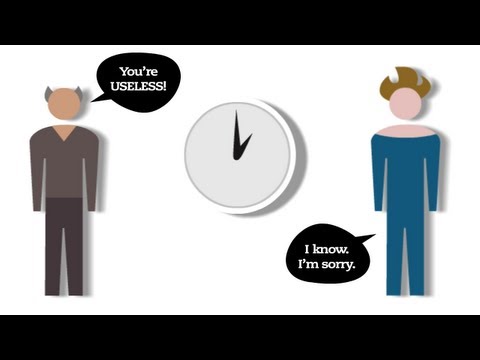
People who repeatedly make mistakes and apologize often don't truly remember or encode the learning from their past reflections. They remember the act of mistake but not the subsequent remorse or learning. This is likened to a Go player not performing ' 복기 ' (review of the game), which is crucial for improvement.
Follow-up actions are key to embedding corrective memories.
Apologies are promises for the future. To break the cycle of repeated mistakes, it's essential to implement immediate follow-up actions. For example, if someone failed to create an outline, instead of just saying to do it next time, ask them to create it immediately or send it via email soon after. This action creates a memory of the corrective behavior.
For promises without immediate action, concrete rules are necessary.
For promises like 'I won't drink anymore' or 'I'll answer calls promptly', which don't lend themselves to immediate correction, setting specific, measurable rules is vital. For example, 'I will call by 8 PM every Friday' or implementing 'pre-actions' like 'call before drinking' or 'notify in advance if you can't answer'.
Avoid giving a sense of 'completion' to those who break promises.
When managing someone who breaks promises, avoid giving them a sense of completion. For instance, if the rule is to call before drinking, simply calling might make them feel they've fulfilled their obligation. Instead, create multi-step actions, like calling and then sending two messages during the gathering. Changing adult behavior requires persistent, small efforts.
The Psychology Behind Blunt and Sarcastic Responses
Direct answers can be perceived as rude if they lack implicit communication skills.
Individuals who answer questions very directly, like 'I'll carry it myself' or 'Of course it's hot, it's cold outside', often lack the ability to use indirect language or 'figure of speech' (은유법). This directness can be jarring and perceived as rude because it lacks the subtlety that makes communication pleasant or humorous. These individuals may have a higher baseline of anger.
Anger and lack of politeness contribute to direct, blunt responses.
A significant characteristic of people who respond directly is often an underlying anger. They might not possess the 'wit' or skill for softer, indirect communication. Their responses, even when seemingly polite requests like 'Shall I wrap it for you?', can be sharp and unhelpful ('I'll carry it myself') because they imbue them with their inherent irritability, which requires little provocation to explode.
When dealing with irritable individuals, frame choices by mentioning others' actions.
To manage interactions with people prone to anger or bluntness, avoid presenting them with equal 50/50 options. Instead, frame their choice by first stating what most people do. For example, 'Most people prefer it hot on a day like today, how would you like yours?' or 'Most people don't request wrapping, how would you like yours?'. This approach makes it harder for them to arbitrarily pick the aggressive option because it implies social conformity.
Reframe aggressive responders as 'diligent' to protect your own mental well-being.
If someone consistently reacts aggressively or rudely despite your best efforts, it's healthier for your mental state to reframe them. Instead of getting frustrated, consider them 'very diligent' or 'very sincere' in their anger. This allows you to maintain a more peaceful perspective by telling yourself, 'If they can be so diligently angry, I must be diligently living my life.'
Managing Colleagues Who Broadcast Negative Emotions
Displaying displeasure is a bid for attention, validation, and control.
Employees who conspicuously show their anger or bad mood at work are often anxious about others not noticing their feelings. They want their displeasure to be acknowledged, resolved, and for others to react accordingly, perhaps even to cater to them. They are essentially seeking validation and control.
Lack of formal consequences emboldens emotional broadcasting.
These individuals often don't face formal repercussions for displaying their negative emotions at work. Because they don't perceive personal or professional disadvantages from broadcasting their mood, they believe they can leverage it to influence the situation in their favor. This behavior is driven by a desire to control the environment or gain an advantage.
Gently acknowledging their 'effort' can be an effective counter-strategy.
The most effective way to counter this behavior is to subtly acknowledge the 'effort' they are putting into displaying their emotions. Telling them, 'You look very tired' is a way of saying, 'I see you're expending a lot of energy on this display.' This can make them feel seen and embarrassed, often leading them to cease the behavior because their strategy has been recognized. This is particularly effective when they are visibly upset but not actively working.
Understanding and Overcoming the Mimicry of Disliked Behaviors
Mimicking disliked behaviors stems from cognitive activation and poor impulse control.
When people find themselves imitating behaviors they dislike in others, especially elders or superiors, it's often due to 'cognitive activation' and a momentary lapse in self-control. The disliked behavior becomes psychologically active, and in moments of stress or heightened emotion, it can emerge unconsciously. This is further exacerbated by biased memory recall.
Biased memory recall reinforces the mimicry of disliked behaviors.
We tend to remember instances where certain behaviors (like yelling) seemed to yield results, a phenomenon akin to superstitions. Even if calm approaches were more successful, the dramatic instances where yelling 'worked' are disproportionately remembered. This selective memory reinforces the idea that such behaviors are effective, leading to their unconscious adoption.
Reframing 'inaction' as 'action' is crucial for memory encoding.
To combat this, one must shift their perception from 'not doing' something disliked to 'doing' something else instead. For example, instead of thinking 'I won't yell', think 'I will speak calmly'. This reframing converts it into an 'action' that can be stored in memory, making it easier to control behavior, similar to how diabetics managing their sugar intake by focusing on 'diet control' rather than just 'not eating sweets'.
Specific, written commitments are needed to avoid replicating unwanted behaviors.
To prevent imitating disliked behaviors, make extremely specific commitments to yourself, preferably in writing. Don't just resolve 'not to yell' or 'not to talk during arguments'. Instead, commit to specific actions like, 'If the report is unsatisfactory, I will not yell; I will calmly discuss how to improve it.' The more precise the commitment, the more effective it is.
When addressing someone mimicking disliked behavior, focus on the past in a decontextualized way.
If you need to address someone who is imitating disliked behaviors, directly confronting them with 'You're doing exactly what [senior] does' can backfire, leading to defensiveness. Instead, discuss the disliked behavior as a separate event from a past context, referencing the senior's actions without direct comparison or judgment. For example, 'I remember when Mr. Park would yell when displeased, and it really bothered me.' This approach helps them reflect without immediate defensiveness. It's about reminding them of the unpleasantness of the behavior itself.
Conclusion: Understanding Human Complexity
Human behavior is complex and varies greatly, even within groups.
Understanding the psychology behind perplexing human behaviors is key. Cognitive psychology reveals that profound differences exist not just between cultures but also within individuals. The core takeaway is that understanding others requires stepping into their perspective.
Empathy and perspective-taking are essential for navigating human interactions.
The video concludes by emphasizing that truly understanding others involves considering their perspective, not just our own. This ability to step back and see things from another's viewpoint is fundamental to navigating the complexities of human relationships and interactions.
Ask a Question
*Uses 1 Wisdom coin from your coin balance