Measuring Photosynthesis: Leaf Disk Assay
Summary
This video explains the process of photosynthesis, its importance for life on Earth, and demonstrates a practical lab experiment to measure its rate. Using a leaf disk assay, the experiment involves creating a vacuum to infiltrate leaf disks with a solution, then observing their flotation rate under a light source as an indicator of oxygen production during photosynthesis. The experiment highlights the necessity of carbon dioxide and provides a framework for designing further investigations into factors affecting photosynthetic rates.
Key Insights
The leaf disk assay provides a method to investigate variables affecting photosynthetic rates.
The completed leaf disk assay serves as a foundation for further scientific inquiry. By understanding this methodology, students can design their own experiments to test various hypotheses about factors that could influence the rate of photosynthesis, such as light intensity, temperature, or CO2 concentration.
Life on Earth is fundamentally dependent on photosynthesis for survival.
The existence of all life on Earth is directly or indirectly dependent on the process of photosynthesis. This biological conversion of light energy into chemical energy forms the base of most food chains and produces the oxygen essential for aerobic respiration.
Sections
Introduction to Photosynthesis
Photosynthesis is vital, converting sunlight, water, and CO2 into sugars and releasing oxygen.
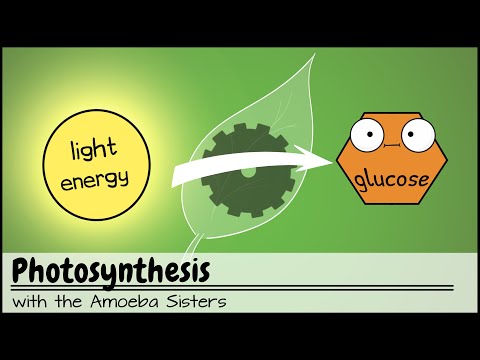
Photosynthesis is a fundamental process by which plants and other primary producers utilize solar energy to convert water and carbon dioxide into sugars. This process is essential for life on Earth as it also releases the oxygen necessary for respiration. The sugars produced are used to build plant structures like trunks, leaves, and fruits, and are also consumed by other organisms for food, fuel, and shelter.
Climate change impacts photosynthesis by altering CO2 levels, temperature, and drought conditions.
Scientists are paying close attention to photosynthesis, especially in the context of climate change, which significantly affects factors crucial for this process, such as atmospheric carbon dioxide concentrations, rising global temperatures, and the prevalence of droughts.
Leaf Disk Assay: Experimental Setup
The experiment measures photosynthesis by tracking oxygen gas production, indicated by floating leaf disks.
Scientists can measure photosynthesis by monitoring carbon dioxide consumption or, as demonstrated in this experiment, by measuring oxygen production. The leaf disk assay utilizes the principle that as leaves produce oxygen during photosynthesis, they become buoyant and float. This method is presented as a budget-friendly alternative to more complex equipment.
Leaf disks are infiltrated with a solution under vacuum to ensure they sink initially.
For the experiment, leaf disks are prepared to sink in a solution. This is achieved by placing them under a vacuum using syringes. The vacuum removes air from the leaf's airspaces, allowing the surrounding solution to infiltrate them, causing the disks to become dense enough to sink.
Baking soda provides CO2, and dish soap aids solution infiltration by reducing leaf hydrophobicity.
Baking soda (sodium bicarbonate) is added to the water to supply a source of carbon dioxide for photosynthesis. A diluted dish soap solution is also used. The soap reduces the waxy cuticle's hydrophobicity on the leaf surface, facilitating better infiltration by the solution during the vacuum process. Too much soap, however, can cause excessive suds.
Uniform leaf disks are prepared using a hole punch, avoiding major veins.
To ensure consistent results and easier handling, uniform leaf disks are created from whole leaves using a hole punch. It's important to avoid punching through large veins, as these areas are more difficult to infiltrate with the vacuum and solution.
A vacuum is created by pulling and releasing a syringe plunger to infiltrate leaf disks.
The vacuum is generated using a syringe. Leaf disks are placed in the syringe barrel with a small amount of air, followed by the solution. By holding a finger over the opening and pulling back the plunger, a vacuum is created for about 10 seconds. Releasing the plunger allows the solution to replace the air within the leaf disks, causing them to sink. This process may need to be repeated for disks to sink properly.
Control groups (without CO2) and experimental groups (with CO2) are established for comparison.
Two sets of cups are prepared: one labeled 'With CO₂' containing the sodium bicarbonate solution, and another labeled 'Without CO₂' containing plain water. Both receive a drop of soap solution. This setup allows for a direct comparison to demonstrate the necessity of carbon dioxide for photosynthesis.
Lights must be of the same wattage for comparable experimental results across different setups.
When conducting multiple experimental setups or comparing results, it is crucial that the light sources used are of the same wattage. This standardization ensures that light intensity, a key variable, is consistent across all experiments, allowing for valid comparisons.
Leaf disks must be kept in the dark before the experiment begins to prevent premature photosynthesis.
Once the leaf disks have sunk and are in their respective cups, the cups are covered with aluminum foil. This keeps the disks in darkness, preventing any photosynthesis from occurring before the experiment officially starts under the light source.
Bright light sources require safety precautions like glasses and gloves due to potential shattering hazards.
When working with bright light sources, such as grow lights or high-wattage desk lamps, it is important to wear safety glasses and gloves. These precautions are necessary because intense light sources can pose a hazard, including the risk of the bulb shattering.
Conducting the Experiment and Data Collection
Oxygen production causes leaf disks to float, and their rising is timed to estimate photosynthetic rate.
After setting up the leaf disks in their cups under the light source, the timer is started. As the leaf disks in the 'With CO₂' cup photosynthesize, they produce oxygen. This oxygen accumulates within the disks, making them buoyant and causing them to float to the surface. The time it takes for the disks to float is recorded in one-minute intervals.
The rate of photosynthesis is estimated by counting the number of floating disks over time.
The experiment involves recording the total number of floating disks each minute. The cup is gently swirled to dislodge any disks stuck to the sides. This process continues until all disks in the 'With CO₂' cup are floating. The disks in the 'Without CO₂' cup will not float because they lack the necessary carbon dioxide for photosynthesis.
A consistent point of reference, like the 50% flotation time, aids in comparing data from multiple assays.
To effectively compare data from different experimental setups or trials, it is recommended to use a consistent reference point. The video suggests using the time at which at least 50% of the leaf disks have risen as a standardized measure for comparison across assays.
The leaf disk assay provides a method to investigate variables affecting photosynthetic rates.
The completed leaf disk assay serves as a foundation for further scientific inquiry. By understanding this methodology, students can design their own experiments to test various hypotheses about factors that could influence the rate of photosynthesis, such as light intensity, temperature, or CO2 concentration.
Core Principles of Photosynthesis
Life on Earth is fundamentally dependent on photosynthesis for survival.
The existence of all life on Earth is directly or indirectly dependent on the process of photosynthesis. This biological conversion of light energy into chemical energy forms the base of most food chains and produces the oxygen essential for aerobic respiration.
Ask a Question
*Uses 1 Wisdom coin from your coin balance