Summary
This comprehensive review covers key topics from Units 1, 2, and 3 of the AP Biology curriculum. It details the chemistry of life, including water properties, biomolecules (carbohydrates, lipids, proteins, nucleic acids), and functional groups. The review explores cell structure and function, contrasting prokaryotic and eukaryotic cells, the importance of cell size, compartmentalization, and the endomembrane system. It delves into cellular respiration, outlining glycolysis, the link reaction, Krebs cycle, and oxidative phosphorylation, and photosynthesis, covering its two phases, the role of chlorophyll, and the Calvin cycle. Finally, it discusses enzyme properties, regulation, and their role in metabolic pathways, along with cell energy concepts like ATP and energy coupling.
Key Insights
Monomers link via dehydration synthesis to form polymers; hydrolysis breaks them down.
Carbohydrates, proteins, and nucleic acids are polymers built from monomers. Dehydration synthesis removes water to form bonds between monomers, creating polymers. Hydrolysis uses water to break polymers back into monomers. This process is enzyme-mediated.
Phospholipid structure (hydrophilic head, hydrophobic tail) forms the cell membrane bilayer.
Phospholipids have a polar, hydrophilic head and nonpolar, hydrophobic tails. In aqueous environments, they spontaneously arrange into a bilayer with heads facing water and tails inward, forming the fundamental structure of cell membranes.
Sickle cell disease arises from a single amino acid substitution in hemoglobin.
A mutation replaces glutamic acid (acidic) with valine (nonpolar) in hemoglobin. This causes deoxygenated hemoglobin to aggregate, forming fibers that distort red blood cells into a sickle shape. These sickled cells can block blood flow, causing pain and organ damage. Heterozygotes have malaria resistance.
Prokaryotic cells are simple, lacking a nucleus and membrane-bound organelles; Eukaryotic cells are complex with a nucleus and organelles.
Prokaryotes (bacteria, archaea) are small, have circular DNA, no nucleus, and lack membrane-bound organelles. Eukaryotes (domain Eukarya) are larger, have linear chromosomes within a nucleus, and possess numerous membrane-bound organelles, including mitochondria (defining feature).
Cells are small to maintain a high surface area-to-volume ratio for efficient transport.
A high surface area-to-volume ratio is essential for cells to efficiently exchange nutrients and waste. As size increases, volume grows faster than surface area, reducing this ratio and hindering diffusion. Organisms increase surface area in tissues via thin sheets or folded structures (gills, villi, mitochondrial membranes).
Mitochondria and chloroplasts originated via endosymbiosis from free-living prokaryotes.
Evidence includes their own circular DNA, ribosomes, binary fission, and double membranes. An ancestral archaeal cell engulfed a bacterium (forming mitochondria) and later a photosynthetic bacterium (forming chloroplasts), leading to eukaryotic complexity.
Osmosis is water diffusion across a selectively permeable membrane from hypotonic to hypertonic solutions.
Water moves from areas of higher water potential (more water, less solute) to lower water potential (less water, more solute). This drives cellular processes and turgor pressure in plants, and can cause cells to swell or shrink if placed in different tonicity solutions.
Enzymes catalyze reactions by lowering activation energy, are highly specific, and have optimal conditions.
Enzymes are typically proteins with specific 3D structures (secondary, tertiary, quaternary). Their active sites bind substrates, facilitating reactions. Deviations in pH, temperature, or ionic concentration can alter enzyme shape (denaturation) and reduce function.
ATP stores and releases energy via hydrolysis of its phosphate bonds, powering cellular work.
ATP (adenosine triphosphate) consists of adenine, ribose, and three phosphate groups. Energy is released when the terminal phosphate bond is broken (ATP to ADP + Pi), a process coupled to endergonic reactions.
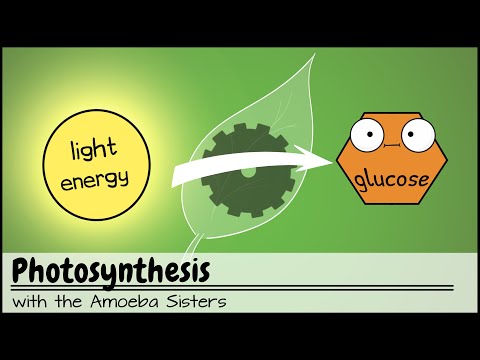
Photosynthesis converts light energy into chemical energy in glucose, using CO2 and water, releasing O2.
The overall equation is 6CO2 + 6H2O + Light Energy → C6H12O6 + 6O2. It is an endergonic process that increases organization (decreases entropy) and created Earth's oxygen atmosphere.
Oxidative phosphorylation uses an electron transport chain and chemiosmosis to generate the majority of ATP.
Electrons from NADH and FADH2 flow down the electron transport chain in the inner mitochondrial membrane. This energy pumps protons into the intermembrane space, creating a gradient that drives ATP synthesis via ATP synthase.
Sections
Unit 1: The Chemistry of Life
Water's polarity and hydrogen bonds are crucial for cohesion, adhesion, and surface tension.
Water is a polar molecule due to unequal electron sharing, creating partial negative and positive regions. Hydrogen bonds are intermolecular forces that form between these regions, crucial for properties like cohesion (water-water attraction), adhesion (water-other substance attraction, e.g., to xylem walls), and surface tension. These properties are vital for processes like transpiration in plants.
Acids have more H+ ions; bases have more OH- ions, affecting pH.
Acidic solutions have a higher concentration of hydrogen ions (H+) than hydroxide ions (OH-), leading to a pH below 7. Basic (alkaline) solutions have a higher concentration of OH- ions than H+ ions, resulting in a pH above 7. While direct pH questions are rare, understanding pH is essential for interpreting other biological concepts.
CHNOPS elements form the basis of life's molecules, with specific roles in energy and structure.
The essential elements for life are Carbon (C), Hydrogen (H), Nitrogen (N), Oxygen (O), Phosphorus (P), and Sulfur (S). Carbon is central to all organic molecules. Hydrogen is involved in energy exchange (NAD+/NADH) and as ions in energy gradients. Phosphorus is key in ATP and nucleic acids. Sulfur is important in protein structure.
Monomers link via dehydration synthesis to form polymers; hydrolysis breaks them down.
Carbohydrates, proteins, and nucleic acids are polymers built from monomers. Dehydration synthesis removes water to form bonds between monomers, creating polymers. Hydrolysis uses water to break polymers back into monomers. This process is enzyme-mediated.
Functional groups like phosphate, hydroxyl, and carboxyl impart specific chemical properties.
Functional groups influence a molecule's properties. Phosphate groups are key in energy transfer (ATP) and nucleic acids. Methyl groups can silence DNA and make molecules hydrophobic. Hydroxyl and carbonyl groups make molecules hydrophilic. Carboxyl and amino groups are essential for amino acids. Sulfhydryl groups stabilize protein structure.
Carbohydrates function in energy storage (starch, glycogen) and structure (cellulose).
Carbohydrates range from monosaccharides (like glucose) to disaccharides and polysaccharides. Polysaccharides serve as energy storage (starch in plants, glycogen in animals) or structural components (cellulose in plant cell walls). Humans cannot digest cellulose due to specific bond linkages.
Lactose intolerance results from insufficient lactase enzyme activity.
Lactose intolerance is common as most mammals lose lactase production after infancy. Certain human populations evolved lactase persistence due to mutations, allowing adult milk consumption. Products like lactase enzyme supplements help digest lactose.
Lipids are nonpolar, diverse in function (energy storage, waterproofing, membranes, signaling).
Lipids are primarily nonpolar hydrocarbons, insoluble in water. They include triglycerides (energy storage), waxes (waterproofing), phospholipids (cell membranes), and steroids (hormones). Unlike other macromolecules, they are not strictly polymers of repeating monomers.
Phospholipid structure (hydrophilic head, hydrophobic tail) forms the cell membrane bilayer.
Phospholipids have a polar, hydrophilic head and nonpolar, hydrophobic tails. In aqueous environments, they spontaneously arrange into a bilayer with heads facing water and tails inward, forming the fundamental structure of cell membranes.
Proteins have four levels of structure, each crucial for function.
Primary structure is the amino acid sequence. Secondary structure involves alpha-helices and beta-pleated sheets formed by backbone hydrogen bonds. Tertiary structure arises from R-group interactions, including hydrogen bonds, ionic bonds, covalent disulfide bonds, and hydrophobic clustering. Quaternary structure involves the assembly of multiple polypeptide subunits.
Sickle cell disease arises from a single amino acid substitution in hemoglobin.
A mutation replaces glutamic acid (acidic) with valine (nonpolar) in hemoglobin. This causes deoxygenated hemoglobin to aggregate, forming fibers that distort red blood cells into a sickle shape. These sickled cells can block blood flow, causing pain and organ damage. Heterozygotes have malaria resistance.
Nucleic acids (DNA, RNA) store and transmit genetic information.
DNA is the molecule of heredity, storing genetic information. RNA plays roles in information transfer (mRNA), and some viruses use RNA as their genetic material. RNA is versatile and can act as an enzyme (ribozymes). ATP, an RNA monomer, is the energy currency of cells.
Nucleotides (sugar, phosphate, base) are monomers of nucleic acids; DNA and RNA differ in sugar and bases.
Nucleotides consist of a five-carbon sugar (deoxyribose in DNA, ribose in RNA), a phosphate group, and one of four nitrogenous bases. DNA uses Adenine, Thymine, Guanine, Cytosine (A-T, G-C pairing). RNA uses Uracil instead of Thymine (A-U, G-C pairing).
DNA's antiparallel strands are held by hydrogen bonds between complementary bases.
DNA consists of two antiparallel strands connected by hydrogen bonds between complementary base pairs (A with T, G with C). DNA is directional, synthesized from the 5' to 3' end.
Unit 2: Cell Structure and Function
Cells are basic units of life with a membrane, DNA, and systems for replication and protein synthesis.
All cells possess a plasma membrane, genetic material (DNA), and mechanisms for replication and protein synthesis (transcription and translation via mRNA and ribosomes). Proteins, especially enzymes, are crucial for cellular functions.
Prokaryotic cells are simple, lacking a nucleus and membrane-bound organelles; Eukaryotic cells are complex with a nucleus and organelles.
Prokaryotes (bacteria, archaea) are small, have circular DNA, no nucleus, and lack membrane-bound organelles. Eukaryotes (domain Eukarya) are larger, have linear chromosomes within a nucleus, and possess numerous membrane-bound organelles, including mitochondria (defining feature).
Cells are small to maintain a high surface area-to-volume ratio for efficient transport.
A high surface area-to-volume ratio is essential for cells to efficiently exchange nutrients and waste. As size increases, volume grows faster than surface area, reducing this ratio and hindering diffusion. Organisms increase surface area in tissues via thin sheets or folded structures (gills, villi, mitochondrial membranes).
Cellular compartmentalization allows distinct internal environments and increases surface area.
Compartmentalization, the division of a cell into specialized compartments (organelles), allows for distinct internal chemistries and specialized functions without interfering with the cytoplasm. It also provides extensive internal membrane surface area for processes like ATP synthesis.
The endomembrane system (nuclear envelope, ER, Golgi, lysosomes, vesicles) facilitates material transport and modification.
This interconnected network of membranes and sacs is dynamic, with components flowing between them. It synthesizes, modifies, packages, and transports proteins and lipids destined for various cellular locations or secretion.
Mitochondria and chloroplasts originated via endosymbiosis from free-living prokaryotes.
Evidence includes their own circular DNA, ribosomes, binary fission, and double membranes. An ancestral archaeal cell engulfed a bacterium (forming mitochondria) and later a photosynthetic bacterium (forming chloroplasts), leading to eukaryotic complexity.
The nucleus stores DNA, protected by the nuclear envelope with pores for molecule exchange.
The nucleus contains chromosomes (DNA wrapped around proteins, chromatin when dispersed). The nucleolus within the nucleus is crucial for ribosome assembly. Nuclear pores regulate the passage of molecules like mRNA out and transcription factors in.
Ribosomes synthesize proteins, either free in the cytoplasm or bound to the rough ER.
Composed of rRNA and protein, ribosomes translate mRNA into amino acid sequences. Free ribosomes make proteins for use within the cell; bound ribosomes synthesize proteins for secretion, insertion into membranes, or delivery to organelles like lysosomes.
Mitochondria generate ATP through cellular respiration, possessing their own DNA and ribosomes.
These organelles convert chemical energy from food into ATP. Their inner membrane is highly folded (cristae) to increase surface area for ATP synthesis. The mitochondrial matrix contains enzymes for the Krebs cycle. They exhibit evidence of endosymbiotic origin.
The Endoplasmic Reticulum (ER) exists as rough (ribosome-studded) and smooth (lacks ribosomes) forms.
Rough ER synthesizes proteins for secretion or specific organelles. Smooth ER synthesizes lipids, detoxifies substances, and stores calcium ions.
The Golgi apparatus modifies, sorts, and packages proteins and lipids into vesicles.
A series of flattened sacs, the Golgi receives materials from the ER, chemically modifies them, and packages them into vesicles for transport to other organelles, the cell membrane, or export.
Lysosomes contain hydrolytic enzymes for intracellular digestion and recycling (animal cells only).
These membrane-bound sacs digest macromolecules, worn-out organelles, and engulfed particles. They play a role in programmed cell death (apoptosis).
The cytoskeleton provides structural support, enables cell movement, and internal transport.
A network of protein fibers (microtubules, microfilaments, intermediate filaments), it maintains cell shape, facilitates movement (like amoeboid motion), and transports organelles within the cell.
Plant cells have a cell wall for structural support and a large central vacuole for storage and turgor pressure.
The cell wall, primarily cellulose, prevents excessive water uptake and provides rigidity. The central vacuole stores water, ions, and macromolecules, maintaining turgor pressure against the cell wall, which keeps plants from wilting.
Chloroplasts perform photosynthesis, also originating from endosymbiosis.
These organelles, containing chlorophyll within thylakoid membranes, convert light energy into chemical energy (sugars). Like mitochondria, they have their own DNA and ribosomes and possess a double membrane.
The cell membrane controls passage of substances, acting as a selectively permeable barrier.
The fluid mosaic model describes the membrane as a dynamic structure of phospholipids, proteins, and cholesterol. Its selective permeability regulates the entry and exit of molecules.
Membrane transport includes passive diffusion (simple and facilitated) and active transport.
Passive transport moves substances down their concentration gradient without cellular energy. Active transport requires energy (ATP) to move substances against their gradient, often via protein pumps. Endocytosis and exocytosis are forms of bulk transport.
Membrane potential is an electrical charge difference across the membrane, crucial for nerve impulses and ATP synthesis.
Created by pumping ions (like H+ or Na+), this voltage difference powers processes like ATP synthesis in mitochondria/chloroplasts and nerve signal transmission.
Osmosis is water diffusion across a selectively permeable membrane from hypotonic to hypertonic solutions.
Water moves from areas of higher water potential (more water, less solute) to lower water potential (less water, more solute). This drives cellular processes and turgor pressure in plants, and can cause cells to swell or shrink if placed in different tonicity solutions.
Tonicity describes solution concentration relative to cell solute concentration, affecting water movement.
In hypotonic solutions, cells gain water (bursting in animal cells, turgid in plants). In isotonic solutions, water movement is balanced. In hypertonic solutions, cells lose water (shriveling).
Contractile vacuoles in freshwater protists regulate water balance by expelling excess water.
These organelles collect water that enters via osmosis and pump it out, preventing the cell from bursting in its hypotonic freshwater environment.
Stomata, flanked by guard cells, regulate gas exchange and water transpiration in leaves.
Guard cells change shape based on potassium ion concentration and water availability, opening or closing the stomatal pores to control CO2 uptake and water vapor loss.
Water potential (Ψ) quantifies water's tendency to move, influenced by solute potential and pressure potential.
Water moves from areas of higher water potential to lower water potential. Ψ = Ψs (solute potential) + Ψp (pressure potential). Adding solute lowers Ψs; adding pressure increases Ψp.
Unit 3: Cellular Respiration and Photosynthesis
Enzymes catalyze reactions by lowering activation energy, are highly specific, and have optimal conditions.
Enzymes are typically proteins with specific 3D structures (secondary, tertiary, quaternary). Their active sites bind substrates, facilitating reactions. Deviations in pH, temperature, or ionic concentration can alter enzyme shape (denaturation) and reduce function.
Enzyme activity is sensitive to pH and temperature, with optimal ranges for peak efficiency.
Extreme pH or temperatures can denature enzymes permanently (irreversible) or temporarily (reversible), affecting their ability to bind substrates and catalyze reactions.
Enzyme activity increases with substrate concentration up to a saturation point.
At low substrate levels, reaction rates are limited by substrate availability. At high concentrations, all active sites are occupied (saturated), and the rate plateaus.
Inhibition can be competitive (blocking active site) or non-competitive (altering active site shape via allosteric binding).
Competitive inhibitors bind to the active site, preventing substrate access. Non-competitive inhibitors bind to an allosteric site, causing a conformational change that hinders substrate binding.
Metabolic pathways are series of enzyme-catalyzed reactions, either linear or cyclical.
These pathways convert reactants to products through intermediate steps, regulated by enzymes. Examples include glycolysis (linear) and the Krebs cycle (cyclical).
Autotrophs produce their own food; photoautotrophs use light, chemoautotrophs use chemical energy.
Organisms that create their own organic compounds using inorganic sources. Plants are photoautotrophs; some bacteria and archaea are chemoautotrophs.
Heterotrophs obtain energy and matter by consuming other organisms.
Consumers, decomposers, and parasites that rely on organic compounds produced by other organisms.
Exergonic reactions release energy and increase entropy; endergonic reactions require energy and decrease entropy.
Exergonic reactions (e.g., hydrolysis, cellular respiration) release energy. Endergonic reactions (e.g., dehydration synthesis, photosynthesis) require energy input.
ATP stores and releases energy via hydrolysis of its phosphate bonds, powering cellular work.
ATP (adenosine triphosphate) consists of adenine, ribose, and three phosphate groups. Energy is released when the terminal phosphate bond is broken (ATP to ADP + Pi), a process coupled to endergonic reactions.
Energy coupling links exergonic reactions (e.g., ATP hydrolysis) to endergonic reactions.
This process allows cells to perform energetically unfavorable reactions by using energy released from favorable reactions, such as powering active transport or muscle contraction with ATP breakdown.
Photosynthesis converts light energy into chemical energy in glucose, using CO2 and water, releasing O2.
The overall equation is 6CO2 + 6H2O + Light Energy → C6H12O6 + 6O2. It is an endergonic process that increases organization (decreases entropy) and created Earth's oxygen atmosphere.
Photosynthesis has two phases: light reactions (convert light to ATP/NADPH) and the Calvin cycle (synthesize sugar).
Light reactions occur in thylakoids, splitting water, producing O2, ATP, and NADPH. The Calvin cycle occurs in the stroma, using ATP and NADPH to fix CO2 into carbohydrates.
Chlorophyll absorbs blue and red light most effectively, reflecting green light.
The absorption spectrum shows chlorophyll's peak absorption in blue-violet and red wavelengths. The action spectrum correlates light wavelengths with photosynthetic rate, confirming blue and red light drive photosynthesis most efficiently.
The Calvin cycle fixes CO2 into organic molecules through carbon fixation, energy investment, and regeneration phases.
CO2 combines with RuBP (catalyzed by Rubisco), forming unstable intermediates. ATP and NADPH are used to reduce these intermediates into G3P (a 3-carbon sugar). Some G3P exits the cycle to build glucose and other organic molecules, while the rest regenerates RuBP.
Cellular respiration equation: C6H12O6 + 6O2 → 6CO2 + 6H2O + ATP (energy released).
This overall process occurs in multiple stages: glycolysis (cytoplasm), link reaction & Krebs cycle (mitochondrial matrix), and oxidative phosphorylation (inner mitochondrial membrane). It's an exergonic process that releases energy and increases entropy.
Glycolysis breaks glucose into pyruvate, producing a net gain of ATP and NADH.
This anaerobic process in the cytoplasm yields 2 ATP, 2 NADH, and 2 pyruvate molecules from one glucose molecule. It involves energy investment, cleavage, and energy harvest stages.
The link reaction converts pyruvate into acetyl-CoA, producing CO2 and NADH.
Pyruvate enters the mitochondrial matrix and is oxidized to acetyl-CoA, releasing CO2 and generating NADH. This step connects glycolysis to the Krebs cycle.
The Krebs cycle oxidizes acetyl-CoA, generating ATP, NADH, FADH2, and releasing CO2.
This cyclical pathway in the mitochondrial matrix produces 1 ATP, 3 NADH, 1 FADH2 per acetyl-CoA molecule (effectively doubling this per glucose), and releases CO2. It's also known as the citric acid cycle or TCA cycle.
Oxidative phosphorylation uses an electron transport chain and chemiosmosis to generate the majority of ATP.
Electrons from NADH and FADH2 flow down the electron transport chain in the inner mitochondrial membrane. This energy pumps protons into the intermembrane space, creating a gradient that drives ATP synthesis via ATP synthase.
Brown fat cells generate heat instead of ATP through uncoupling proteins in mitochondria.
Thermogenin creates proton channels in the inner mitochondrial membrane, allowing protons to flow back into the matrix without passing through ATP synthase, releasing energy as heat.
Ask a Question
*Uses 1 Wisdom coin from your coin balance