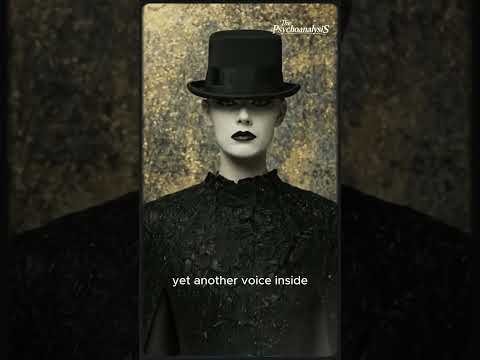
Why Jung Believed INFJs Hide a Second Personality No One Ever Sees
Summary
This video explores the concept of the INFJ personality type's 'second personality,' as described by Carl Jung. It posits that INFJs, due to their cognitive function stack, develop a deep, complex interior self that remains hidden from the external world. This hidden self contains precise opinions, dark humor, principled anger, singular desires, and a direct way of engaging with reality, often kept private due to translation difficulties, inadequate responses, and a desire to protect its completeness. Jung believed this 'unrealized self' can become stagnant ('psychic crystallization') and lead to loneliness if not carefully integrated, advocating for gradual practice of expression rather than performance.
Key Insights
Jung identified a unique psychological structure in INFJs necessitating this second personality.
Carl Jung discovered that for a specific psychological type, the INFJ, the development of a second, interior personality is not a choice but a structural inevitability, stemming from their unique psyche.
Internal and external directions of the INFJ can diverge psychologically.
Jung observed that the internal perception (Ni) and the external orientation (Fe) within the INFJ can develop different or conflicting desires and values over time, driven by psychological necessity rather than choice.
It embodies a direct and certain engagement with reality, seen when alone.
Significantly, this hidden self contains a way of engaging with reality directly and with certainty, without the softening or management of others' comfort, experienced when the INFJ is finally alone.
Protection of the complete interior from external disappointment is key.
The second personality remains hidden partly to protect the interior world, which is perceived as the only place that has never disappointed, unlike the partial and noisy external world.
Practice emerging in small, low-stakes moments is crucial.
The second personality must practice emerging in small, low-stakes contexts by deliberately offering an unqualified opinion or fragment of interior complexity without immediate softening or checking reception.
The work is to stop treating the interior as too complex for reality.
The core work for INFJs is not to expose their interior, but to cease viewing it as too complete or complex for reality to contain, recognizing it's withheld from their own life's relationship.
Sections
Introduction to the INFJ's Second Personality
INFJs live a public life that is measured and thoughtful, serving others' needs.
The INFJ often presents a public persona that is measured, thoughtful, and warm, attuned to the needs and expectations of others. This version is learned and oriented towards being legible to the world.
Behind the public persona lies a complete, unrevealed inner self.
Behind the version of the INFJ that has learned to be understood by the world, there exists a complete, though rarely revealed, inner self. This is not a dark or broken part, but a fuller version of who they are.
Jung identified a unique psychological structure in INFJs necessitating this second personality.
Carl Jung discovered that for a specific psychological type, the INFJ, the development of a second, interior personality is not a choice but a structural inevitability, stemming from their unique psyche.
This isn't about hiding or deception, but a fundamental psychological necessity.
The existence of this second personality is presented not as an act of hiding, deception, or a gap between appearance and desire, but as a fundamental psychological structure identified by Jung.
INFJs are psychologically constructed to have a necessary inner personality.
Jung found that INFJs are psychologically built in such a way that a second, interior personality is not just possible but necessary, due to their inherent cognitive makeup.
Understanding the second personality explains INFJ behavior and psychology deeply.
The video aims to explain what this second personality contains, why it exists, why it remains hidden, the costs of keeping it concealed, and what happens when it emerges, suggesting it explains fundamental aspects of the INFJ experience.
The INFJ Cognitive Function Stack
INFJ function stack: Introverted Intuition (Ni) paired with Extroverted Feeling (Fe).
Jung mapped cognitive functions to understand how types process reality. For INFJs, the stack is Introverted Intuition (Ni) at the top, perceiving invisible patterns and meaning, paired with Extroverted Feeling (Fe), which is oriented towards external emotional atmosphere and harmony.
This unique pairing creates a private yet outwardly attuned individual.
The combination of Ni and Fe produces a person who is simultaneously deeply private (Ni) and highly attuned to others' emotional states and needs (Fe), taking in internally and giving outward constantly.
Internal and external directions of the INFJ can diverge psychologically.
Jung observed that the internal perception (Ni) and the external orientation (Fe) within the INFJ can develop different or conflicting desires and values over time, driven by psychological necessity rather than choice.
INFJ's public warmth and empathy are genuine but partial expressions.
The warmth, empathy, and deep listening INFJs exhibit are real expressions of their Extroverted Feeling function, but they represent only the parts of their interior that have learned to be safe and welcomed by the social world.
The hidden self is too complete for ordinary social interaction.
The parts of the INFJ's interior that remain hidden are not dark or shameful, but too complete, layered, demanding, and unwilling to operate at the superficial level most social interactions require, leading them to withdraw.
Contents of the 'Unrealized Self'
Jung called the hidden INFJ interior the 'unrealized self'.
Jung referred to the hidden interior of the INFJ as the 'unrealized self,' signifying the totality of their being that has not yet found external expression, distinct from merely repressed or shadow aspects.
This self contains precise, validated opinions and convictions.
The unrealized self holds opinions so precise they could unsettle others, and beliefs formed in the deep interior, tested against personal perception and private thought, held with unshakeable conviction.
It includes specific, often dark or absurdist, humor.
This hidden self contains a unique sense of humor, often dark, absurdist, and filled with specific references, which the public personality would never risk expressing due to its niche nature.
Principled, reasoned anger at violations of specific values is contained within.
The unrealized self holds not suppressed resentment, but principled, precise, and deeply reasoned anger concerning specific violations of values, articulated internally but rarely spoken externally.
Desires within are stranger, more particular, and deeply felt.
It contains desires that are more singular, particular, and deeply felt than anything expressed publicly, not necessarily darker, but more unique and less willing to compromise.
It embodies a direct and certain engagement with reality, seen when alone.
Significantly, this hidden self contains a way of engaging with reality directly and with certainty, without the softening or management of others' comfort, experienced when the INFJ is finally alone.
Reasons for Concealment
The 'cost of translation' makes direct expression difficult.
Translating the complex interior world into external language results in a loss of essential depth, making the expression feel less certain and causing pain, leading INFJs to abandon the attempt.
Inadequate external responses discourage sharing the inner self.
When the rare moments of interior certainty or directness surface, the inadequate or partial external responses received lead the INFJ to feel misunderstood and decide not to share such depths again.
Protection of the complete interior from external disappointment is key.
The second personality remains hidden partly to protect the interior world, which is perceived as the only place that has never disappointed, unlike the partial and noisy external world.
The interior is protected where it cannot be reduced or misunderstood.
Protecting the completeness of the inner self by keeping it inside ensures it cannot be reduced, misunderstood, or diminished, maintaining its integrity.
Consequences of Concealment: Psychic Crystallization
Indefinite concealment leads to 'psychic crystallization'.
Jung's term 'psychic crystallization' describes the state of an interior that stops developing due to lack of friction with external reality.
Opinions and beliefs can become fixed and unearned certainties.
Without encountering resistance or counter-argument, opinions become fixed, and beliefs calcify into certainties that are not properly earned through engagement with differing perspectives.
Unexpressed inner self creates loneliness and a sense of being unknown.
The unexpressed second personality exerts pressure, leading to a quiet accumulation of loneliness that is difficult to name, and a recurring sense of being deeply unknown by others.
INFJs may grieve being loved for only a partial version of themselves.
A strange grief arises from being loved for a version of oneself that is only partially authentic, as the full complexity remains hidden.
Living two half-lives: one visible, one sealed.
Jung stated that an INFJ who never allows the second personality to surface does not live a half-life but two half-lives: one visible and one sealed, neither complete.
Integrating the Second Personality
Integration requires one person who can receive the full complexity.
The second personality doesn't need a large audience but one person capable of receiving its full complexity without discomfort or requiring translation.
Jung called this 'recognition of the self by another self'.
Jung considered the encounter where the second personality is recognized by another self as one of the rarest and most significant human experiences.
Practice emerging in small, low-stakes moments is crucial.
The second personality must practice emerging in small, low-stakes contexts by deliberately offering an unqualified opinion or fragment of interior complexity without immediate softening or checking reception.
Gradual practice builds outward movement like a muscle.
The interior learns to move outward gradually and imperfectly through repeated use, similar to how a muscle learns movement, leading to increasing ease.
The work is to stop treating the interior as too complex for reality.
The core work for INFJs is not to expose their interior, but to cease viewing it as too complete or complex for reality to contain, recognizing it's withheld from their own life's relationship.
Naming the interior, even briefly, is the first act of external existence.
Naming the interior self, even in a single sentence shared with others, is the first step in allowing it to exist outside the vault and begin the process of contact.
Ask a Question
*Uses 1 Wisdom coin from your coin balance