"Unconventional Cognition Through the Lens of Cellular Collective Intelligence in Morphogenesis"
Summary
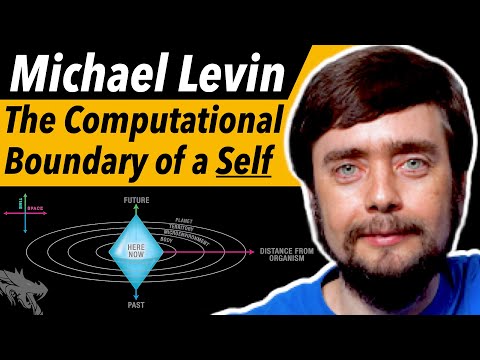
Michael Levin explores the field of diverse intelligence, arguing that biological systems function as collective intelligences that solve problems in unconventional spaces like anatomical morphospace. He demonstrates how bioelectricity acts as a 'cognitive glue' enabling cells to communicate large-scale shape goals. By manipulating these electrical signals, researchers can induce regeneration, reprogram anatomical patterns, and even create novel life forms like xenobots. This framework shifts biomedicine from hardware-level manipulation of DNA to software-level communication with cellular collectives, offering transformative potential for treating cancer, birth defects, and aging while challenging our ethical definitions of agency.
Key Insights
Biological agents are multiscale competency architectures consisting of nested, intelligent components navigating diverse spaces.
Every living system is a collection of parts that are themselves agents with their own agendas. From molecular networks to single cells and tissues, these components solve problems in spaces we often overlook, such as gene expression space, physiological state space, and anatomical morphospace. This architecture allows the higher-level 'self' to emerge from the competencies of its parts, performing tasks like memory and goal-directed behavior that no individual component could achieve alone.
Bioelectricity serves as the cognitive glue and communication interface that organizes cellular collectives into a unified anatomical mind.
Just as neurons use electricity to process information in the brain, non-neural cells use bioelectric gradients to store memories of what a body's shape should be. By using ion channels and gap junctions, cells form electrical networks that decide how an organ should be formed. This bioelectric state is instructive, not just an epiphenomenon, and it acts as the primary medium for communicating high-level goals like 'build a limb here' or 'stop growing now'.
Anatomy is guided by an internal 'set point' or pattern memory that can be rewritten without altering the genetic hardware.
The DNA specifies the hardware—the protein components cells use—but the physiological activity of that hardware determines the final shape. Levin demonstrates that by changing the bioelectric 'software' or set point, one can induce permanent changes in anatomy, such as creating two-headed flatworms or moving a tadpole's eye to its tail. These changes are stable through multiple generations of regeneration even though the genome remains untouched, proving that anatomical form is a programmable state.
Cancer can be redefined as a failure of cellular social integration or a collapse of the agent's cognitive light cone.
When a cell becomes cancerous, it disconnects from the bioelectric network of its neighbors. This isolation causes the cell to 'roll back' to its ancient, unicellular identity, where its goal-space shrinks to its own survival and replication. Restoration of electrical connectivity can force oncogenic cells back into a cooperative state, demonstrating that large-scale anatomical goals can override hardware defects like genetic mutations.
Synthetic beings like xenobots and anthrobots reveal that genomes contain latent potentials far beyond their evolved historical niches.
By liberating skin cells from a frog embryo or tracheal cells from a human and placing them in new environments, researchers have created 'xenobots' and 'anthrobots' with entirely new behaviors and developmental trajectories. These beings have no evolutionary history and no selection for their current forms, yet they show emergent intelligence and replication. This suggests that the 'option space' of biological life is vast and contains many useful forms that evolution never specifically tapped into.
Sections
The Field of Diverse Intelligence
The axis of persuadability provides a framework to recognize and interact with diverse agents based on their cognitive capabilities and interaction protocols.
Levin proposes an 'axis of persuadability' that moves away from naming fixed natural kinds toward identifying how we can best interact with systems. This spectrum ranges from simple mechanical control for passive matter to complex bidirectional relationships for agents with high-level metacognition. It encourages researchers to empirically test where an agent lies on this spectrum rather than making armchair assumptions.
Life operates in multiple problem spaces, including DNA transcription, physiological states, and anatomical morphospace, which are often difficult for humans to visualize.
While humans are good at recognizing behavior in three-dimensional space, biological systems navigate high-dimensional spaces like metabolic states or developmental shapes. Levin argues that if we could perceive our internal chemistry as easily as we perceive our external environment, we would recognize our organs as intelligent symbionts traversing these hidden spaces to maintain health and function.
Bodies are polycomputing frameworks composed of nested systems that constantly observe, hack, and manipulate one another to maintain collective goals.
Every cell is a 'competent' part with molecular networks capable of learning, habituation, and associative memory. The body is an architecture where these intelligent pieces are grouped into larger agents, each attempting to influence the others. Understanding these interactions is key to understanding how a single-celled oite transforms into a complex human adult.
Morphogenesis as a Collective Intelligence
The 'Picasso tadpole' experiment demonstrates how developmental systems use error minimization and navigation of morphospace to reach a specific anatomical goal.
When researchers scrambled the facial organs of tadpoles, the organs moved through novel, unnatural paths to eventually form a normal frog face. This proves that development is not a hardwired sequence of movements but a flexible, goal-directed process that recognizes deviations from a 'target morphology' and works to correct them.
Regeneration in axolotls and planarians showcases a pattern homeostatic system that knows exactly when to stop building after restoring a missing part.
Successful regeneration requires a collective of cells to know what the complete anatomy looks like. Axolotls can regrow limbs, eyes, and even parts of the brain. The process stops once the target shape is reached, indicating that there is an internal representation of the body's set point that the system is constantly monitoring and maintaining.
The anatomical compiler concept represents a future where we communicate high-level design goals to cellular collectives rather than micromanaging genetic hardware.
Current biomedicine focused on DNA and protein engineering is like working at the hardware level of early computers. Levin envisions a transition to 'anatomical compilers' where we input a desired shape—to fix birth defects or regrow a limb—and the system translates that into bioelectric signals the cells understand, using their inherent collective intelligence to build the structure.
Bioelectricity: The Cognitive Glue of the Body
Non-neural cells use bioelectric gradients and gap junctions to integrate individual cellular actions into a large-scale anatomical memory and decision-making process.
Just as the brain uses electrical signals to create a unified 'self' from neurons, the rest of the body uses voltage gradients to align cells toward building organs. These signals allow a piece of tissue to 'remember' how many heads it should have or where an eye should be placed. Levin refers to this as the 'software' of life, which can be modified without changing the genetic hardware.
By manipulating resting potentials with ion channel drugs, researchers can induce the growth of complex organs like eyes in arbitrary locations.
Experiments showed that by setting a specific voltage pattern in tadpole gut cells, those cells would recruit their neighbors to build a fully functional eye. This high-level 'subroutine call' demonstrates that we don't need to know how to build an eye; we just need to know the 'bioelectric trigger' that convinces the local cells to do it themselves.
Planarian worms can store counterfactual memories of their shape, such as believing they should have two heads even while appearing normal.
Researchers created 'two-headed' worms that, even after being cut into pieces, continued to regrow two heads. Interestingly, some worms look normal but possess a latent bioelectric memory of having two heads; they only manifest the second head upon injury. This shows that the cellular collective can store an internal representation of a future goal that is separate from its current physical state.
Cancer as a Shrinkage of the Cellular Self
Oncogenes cause cells to electrically isolate themselves from the collective, leading them to pursue individual goals rather than maintaining anatomical structures.
Levin views cancer not merely as a genetic mutation problem but as a social breakdown between cells. When cells disconnect from the bioelectric network, they lose the memory of being part of an organ and return to an ancient, ameba-like state of selfish proliferation. This transition marks a dramatic shrinkage in the cognitive 'light cone' of the biological agent.
Reconnecting cancerous cells to their neighbors through electrical means can override genetic mutations and force tumors back into healthy tissue patterns.
By using drugs to open gap junctions or activate ion channels, Levin's team showed that cells carrying human oncogenes can be forced to remain part of the collective. Instead of forming tumors, these 'cancerous' cells participated normally in building skin and muscle. This suggests that the collective intelligence of the tissue can manage hardware defects in its components.
Synthetic Life and the Latent Space of Biology
Xenobots and anthrobots demonstrate that cells can autonomously assemble into new multicellular forms with unique behaviors without prior evolutionary selection.
By isolating skin or tracheal cells, Levin created tiny biological robots that swim, navigate mazes, and even replicate kinematically. These beings demonstrate that the genome is not a blueprint for a specific animal, but a toolkit for a set of materials that can produce many different 'endless forms most beautiful' depending on how they are prompted.
The transition from caterpillar to butterfly illustrates the necessity of reinterpreting and translating memories across radically different embodied physical architectures.
Butterflies retain memories from their caterpillar stage despite their brains being largely destroyed and rebuilt during metamorphosis. Because their bodies and needs change entirely, the memories must be translated to remain adaptive. This process highlights biology's fundamental need to be creative and interpret incoming information rather than just recording it with fidelity.
As we create more chimeric and synthetic beings, we must develop new ethical frameworks to relate to diverse forms of embodied mind.
Darwin's tree of life represents only a small sliver of the possible 'option space' for agents. As we build cyborgs, biobots, and AI-biological hybrids, we will face creatures that did not evolve and do not fit into our standard categories. Levin argues for humility and a focus on emergent agency to guide our ethical treatment of these novel beings.
Ask a Question
*Uses 1 Wisdom coin from your coin balance