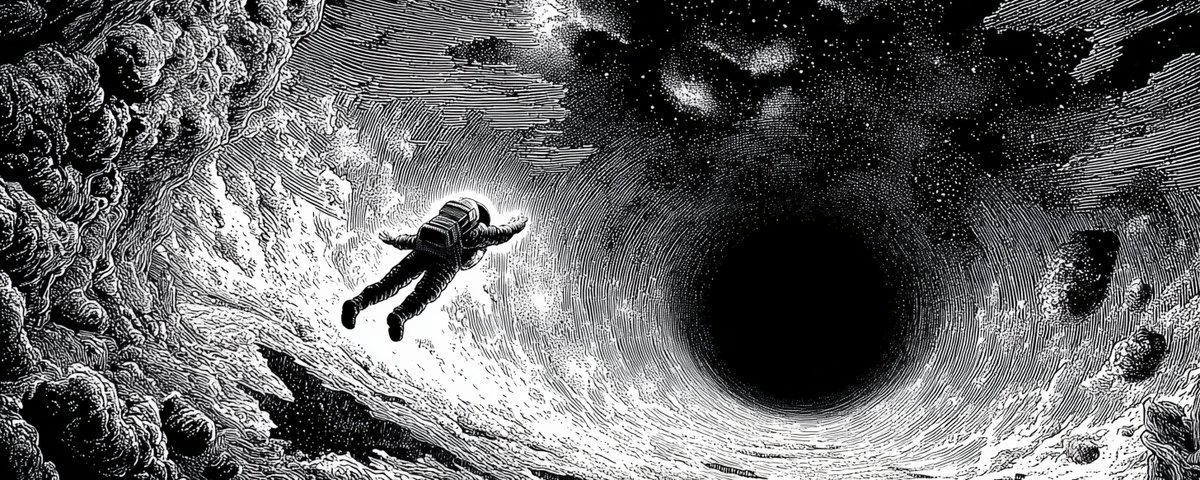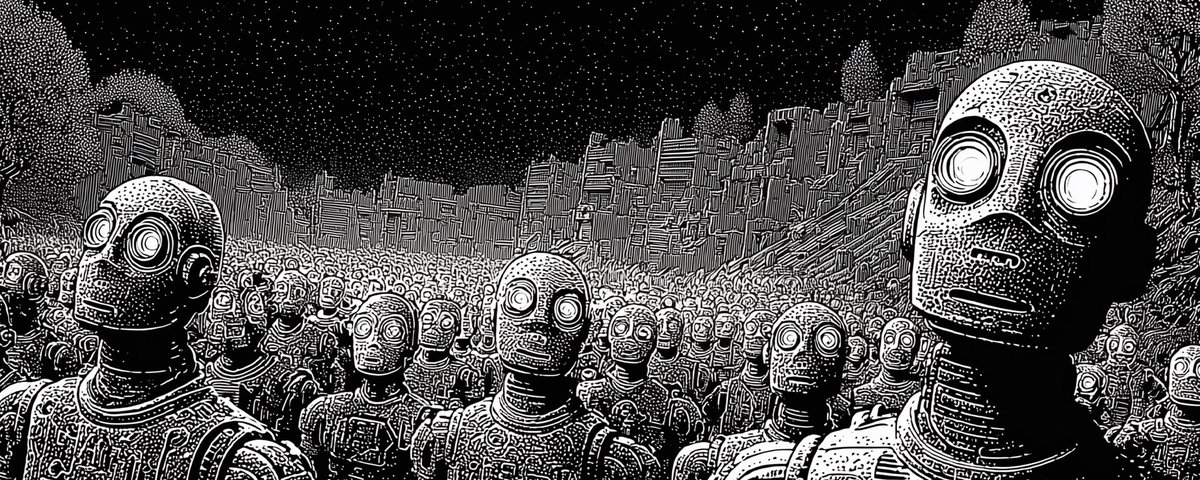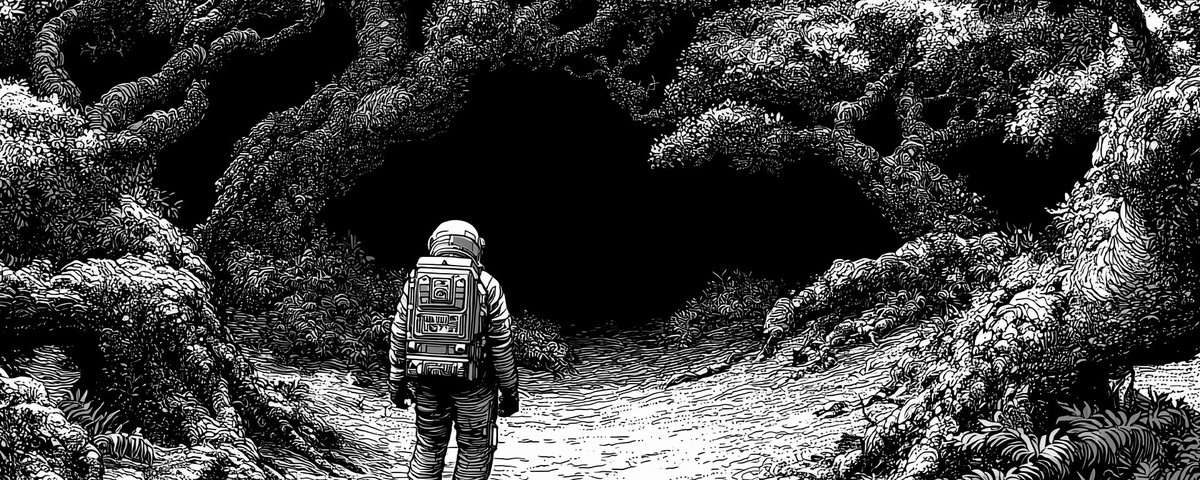
The world will be very different soon...
Summary
The video explores the societal pressure to define oneself by a future career and achievement, using the story of Mason and his struggles with obsolescence in the evolving tech industry. It critiques the notion that one must achieve 'greatness' to be worthy, highlighting how external factors like technological advancement and economic shifts can lead to feelings of inadequacy and worthlessness, regardless of personal effort. Ultimately, it suggests that a fulfilling life involves more than career success, emphasizing the importance of relationships, community, and inner well-being over relentless ambition.
Key Insights
The question 'What do you want to be when you grow up?' instills a lifelong feeling of incompleteness and the pressure to achieve, suggesting one must become 'something else' to be 'someone'.
The video begins by framing the common childhood question, 'What do you want to be when you grow up?', as problematic. When asked to a six-year-old Mason, his ambitious answers like 'superhero' or 'first man on Mars' were met with encouragement to 'keep dreaming big' and that he could 'be whatever he put his mind to'. Unbeknownst to him, this seemingly innocent exchange planted a seed that would lead to a pervasive feeling of incompleteness and insufficiency throughout his life. The underlying message ingrained was that his current self was not enough; he needed to achieve something external, to become something else, in order to be a person of worth.
Relentless ambition, fueled by societal expectations and self-help culture, can lead to sacrificing personal well-being and relationships, ultimately failing to guarantee success in a rapidly changing world.
Mason's life exemplifies the relentless pursuit of success driven by societal pressures and motivational content. He sacrificed time with friends and family, optimized his study and work habits, and pursued a career in visual effects with immense dedication. However, technological advancements, economic downturns, and the pandemic led to his career obsolescence. The video argues that ambition, while it can increase the odds of success, is often portrayed as a 'sanctioned drug' society encourages overdosing on. This overemphasis on career achievement can overshadow equally important aspects of life like relationships, health, and community connection, and even then, there’s no guarantee of success due to external factors beyond individual control.
In a world of rapid technological change, personal worth is not solely defined by career achievements, and adaptability requires a broader perspective on life beyond professional success.
Mason's journey demonstrates that hard work and talent are not always enough in industries that evolve rapidly. His specialization in asset creation became obsolete due to AI. The video posits that while adaptability is necessary, it shouldn't solely focus on professional skills. The narrative shifts to Mason eventually finding success through writing, but importantly, his perspective on value changes. He realizes that 'the world doesn’t really care about you' and that one's worth is not synonymous with their career. True fulfillment, he learns, comes from a balance of professional endeavor with equally vital elements such as friends, family, health, community, and a sense of inner peace, suggesting that 'being someone' is about living a life, not just achieving a title.
Sections
The Imprudent Question and Early Life Pressures
A common question to children, 'What do you want to be when you grow up?', instills a sense of future inadequacy.
The video opens with a conversation between a six-year-old Mason and an adult, Enya, who asks him what he wants to be when he grows up. Mason's ambitious answers (superhero, baseball player, first man on Mars) are met with encouragement. However, the narrator highlights this as a 'strange and imprudent question' that plants a seed of incompleteness, implying the child's current state is insufficient and they must 'become something else' to be 'someone'.
Mason's parents pushed him towards academic excellence for a 'great life'.
Struggling in elementary school due to distraction, Mason was moved to a private school. His parents emphasized his potential for better grades, a great college, and a great job, linking academic success directly to a 'great life'. This conversation discouraged and irritated Mason, reinforcing the idea that he needed to achieve to fulfill his potential.
Adolescence brought increased focus on academics and career preparation, driven by fear of falling behind.
Throughout middle and high school, Mason became more focused, improving his grades. However, the pressure to decide his future vocation intensified. He felt incompetent for not knowing, didn't want to disappoint his parents, and feared falling behind peers. This led him to sacrifice social time for studying, researching careers, and participating in extracurriculars to bolster his college prospects.
Motivational content and a meeting with speaker Terry G reinforced the idea of self-determination and personal responsibility.
During high school, Mason consumed motivational content, particularly from a figure named Terry G. He attended an event and met Terry, who, when Mason expressed his uncertainty about his future and feeling behind, advised him to 'worry about you. You're in control.' Terry emphasized following his gut, passions, and that unhappiness was 'on you,' reinforcing the idea of complete personal agency.
College and the Pursuit of a Specialized Career
Mason chose Animation & Visual Effects at Drexel University, finding a passion for the field.
Enrolling in Drexel University in 2017, Mason eventually settled on the Animation & Visual Effects program, influenced by his interest in video games, movies, and prior experience with video editing and 3D animation. This choice offered him a sense of direction and clarity.
He dedicated himself to visual effects, aiming for a career in major Hollywood studios.
In college, Mason developed a strong passion for visual effects, particularly combining CGI with live-action. He felt a clear sense of purpose and believed working on major feature films would make him 'someone.' He optimized his studies and engaged in extra opportunities, focusing particularly on asset and texture creation by his junior year.
Post-graduation, job market challenges, technological shifts, and the pandemic hindered his career.
After graduating in 2021, Mason struggled to find a job due to a competitive market and lack of professional experience. Changes in visual effects technology and the impact of the COVID-19 pandemic further reduced opportunities. This made securing a decent position in his chosen field extremely difficult.
He started as a runner in a small studio, sacrificing personal life for career advancement.
Mason eventually landed an entry-level runner position at a small post-production studio. Despite it being below his skill level, he saw it as a necessary step to gain experience. He worked long hours, weekends, and neglected friends, family, hobbies, and potential relationships, becoming increasingly focused and isolated in his pursuit of a higher-level job.
Career Obsolescence and Disillusionment
By 2027, despite progress, Mason was laid off due to AI advancements in video generation.
By 2027, Mason had advanced within his studio, gaining responsibilities and building his professional portfolio. However, he was laid off because advancements in AI video generation software made human artists in specialized roles like asset creation largely redundant. The company could no longer afford to employ specialized staff as technology shifted.
The visual effects industry downsized, with AI replacing many specialized roles.
AI technologies had become powerful enough to perform tasks previously done by visual effects artists more quickly and cheaply. While human artists were still needed for project leadership and concept creation, specialized roles like Mason's focused on individual asset creation were diminished. Small and mid-sized companies were struggling or closing, reducing job opportunities.
Mason struggled to find new work and resorted to freelance and barbacking to survive.
Over the next year, Mason had little success finding comparable work. He took on freelance projects outside the film industry to make ends meet. By 2030, even this freelance work diminished, and he began barbacking part-time, feeling he either needed to relearn a new domain or move on. He felt bitter, disillusioned, and worthless.
He turned to writing speculative fiction, finding a way to regain a sense of control.
While considering his next steps, Mason began writing about his experiences, feelings, and uncertainties. He found speculative science-fiction stories particularly useful, allowing him to explore potential futures and their impact on human experience, which gave him a sense of control he lacked in reality. His background in storytelling aided this new pursuit.
A New Path: Writing and Redefined Success
Mason relentlessly pursued a book deal for his speculative science-fiction novel, facing significant rejection.
Mason dedicated himself to writing a speculative science-fiction novel and securing a publishing deal. The process was challenging, with twenty-six rejections from literary agents and thirty-eight from publishing imprints before he finally accepted an offer from a small independent house. This intense focus mirrored his previous career dedication.
His first novel, about brain stimulators, flopped as technology rapidly outpaced its speculative concept.
The novel was about consumer electrical brain stimulators that enhanced focus and performance but led to addiction. By the time it was published, the concepts were already being realized or surpassed in reality due to rapid technological advancement. The book did poorly, leaving Mason devastated and feeling like a failure.
He realized his feelings of worthlessness were common and conceived of a new book.
Mason observed that his feelings of failure and worthlessness were widespread. This realization inspired him to write another book, this time reflecting on the common experience of obsolescence and the struggle to adapt in a fast-changing world.
His second novel, about a futurist struggling with obsolescence, became a bestseller.
Years later, Mason appeared on a podcast to discuss his second novel, published in 2037, which became a bestseller. The book tells the story of Dagny, a futurist author from the 2010s who struggles to keep her work relevant as technology rapidly advances, forcing her to confront the unsustainable nature of her identity as a futurist.
Mason re-evaluated the narrative of ambition and success, emphasizing balance and life beyond career.
On the podcast, Mason shared his revised perspective. He argued that the idea of always needing to pick and work hard for a specific future is flawed, as time and circumstances are unpredictable. He stated that if one isn't where they want to be, it's not always their fault. He clarified that this isn't fatalistic but means recognizing that one's identity is more than their career. He stressed the equal importance of friends, family, health, community, and connection over solely pursuing ambition, calling ambition a 'sanctioned drug' society promotes.
The Double-Edged Sword of Technology and Data Privacy
Digital technology offers great opportunities but also risks like data exploitation.
The video concludes by discussing digital technology as a powerful double-edged sword, enabling expression and connection but also enabling obscurity, bad actors, and treacherous outcomes. It highlights how data brokers exploit personal information online as a direct invasion of privacy and risk.
Data brokers collect and sell personal information without consent, leading to spam, identity theft, and harassment.
Data brokers obtain personal information (name, address, etc.) through online activities without consent and sell it for profit. This can result in spam calls and emails, but also more serious issues like identity theft, hacking, stalking, and harassment. The problem is worsening with increasing data breaches.
Incogni is a service that helps remove personal information from data brokers and search sites.
The sponsor, Incogni, is presented as a solution to combat data brokers. It offers a service to locate, contact, and remove personal information from these brokers and search sites. After initial removal, Incogni continues to monitor and ensure the data remains removed, providing a way to protect oneself in the intrusive technological landscape.
Ask a Question
*Uses 1 Wisdom coin from your coin balance