The problem with pretending quantum mechanics makes sense | Sean Carroll
Summary
In this video, physicist Sean Carroll explores the complexities of quantum mechanics, its historical evolution, the interplay of particles and fields, and the ongoing quest for a complete understanding of the universe. He discusses the shortcomings of current theories like the standard model and general relativity, the implications of quantum field theory, the concept of emergence, and the challenges of reconciling quantum mechanics with gravity. Carroll emphasizes that significant mysteries remain in physics, despite its successes.
Sections
The Enigma of Quantum Mechanics
Quantum mechanics remains poorly understood despite its historical significance.
Sean Carroll opens by noting that even though we celebrate the 100th anniversary of quantum mechanics, our understanding of it remains limited. While it aids in explaining interactions like the Earth’s motion, we struggle with scenarios involving strong gravity, such as black holes.
The historical context of particle physics reveals an evolving understanding.
Carroll contemplates the perspective of a physicist in 1895, hinting at their belief in nearing a complete theory of nature, thanks to advances in particle identification and the acknowledgement of fields as forces acting upon them.
The Rutherford atom model faced critical challenges leading to quantum theory.
The classical Rutherford model visualized electrons orbiting a nucleus like planets. However, it conflicted with electromagnetic theory, which posited electrons would emit light in orbits and collapse into nuclei, indicating an incomplete understanding of atomic behavior.
Quantum mechanics merges particle and wave paradigms under specific conditions.
The breakthrough in quantum mechanics came with the realization that electrons exhibit dual behavior, acting like waves until observed, when they appear as particles. This profound principle challenges traditional deterministic views of classical physics.
Heisenberg and Schrödinger contributed crucial frameworks for quantum mechanics.
In 1925, Heisenberg introduced matrix mechanics, while Schrödinger proposed wave mechanics. Their respective frameworks revealed the probabilistic nature of quantum systems, a radical departure from the certainty established in classical physics.
The wave function signifies probabilities rather than definitive outcomes.
Max Born's reinterpretation of the wave function introduced the concept of probability rather than certainty, denoting that measuring an electron can change its state, an unconventional notion in physics, giving rise to the measurement problem.
Measurement in quantum mechanics begins a unique debate in physics.
Unlike previous theories, quantum mechanics integrates measurement into its foundational laws, raising intriguing questions about the nature of observation and consciousness, and fueling debates that remain unresolved today.
Understanding Quantum Field Theory
Quantum field theory applies quantum principles to fields instead of particles.
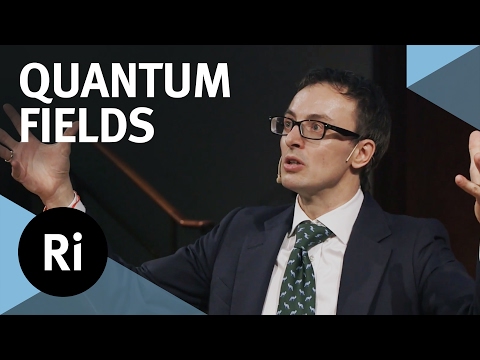
Carroll describes the transition from particle-centric views to quantum field theory, where fields are continuous entities with values at every point in space, representing particles and defining interactions via quantum mechanics.
Fields include both fermions and bosons with distinct properties.
Fermions, like electrons and quarks, cannot occupy the same state, leading to the Pauli exclusion principle, while bosons can pile together. This distinction arises from the nature of their respective fields within quantum theories.
The standard model categorizes known particles and forces.
Carroll outlines how the standard model encompasses six quarks and six leptons, alongside four fundamental forces mediated by gauge bosons, establishing a comprehensive framework for understanding particle physics.
The Higgs boson plays a pivotal role in mass generation.
The Higgs field, unlike others, interacts with particles to provide mass. Its discovery in 2012 corroborated many theoretical predictions, highlighting its importance in the overall structure of particle physics.
Limitations and Open Questions in Physics
The core theory of physics is foundational but not all-encompassing.
The core theory, a combination of general relativity and the standard model, adequately explains many phenomena yet fails to address unresolved issues like dark matter and quantum gravity, indicating a need for deeper understanding.
Emergence highlights the limits of knowledge across different physics layers.
Carroll explains emergence as the concept where complex systems exhibit properties not predictable from their parts. While particle understanding helps bottom-up explanations, it’s insufficient for areas like biology or psychology.
The push for new experiments is essential for theoretical advancement.
To foster new discoveries in fundamental physics, unexpected results are desirable. Larger and more powerful experiments are needed to probe beyond current frameworks, especially regarding quantum gravity and unifying theories.
Current technologies like quantum computers will aid but not replace human intuition.
Carroll is optimistic about the potential of quantum computing in solving physics problems yet remains skeptical that AI or advanced algorithms will yield the creative breakthroughs necessary for theoretical innovation.
Exploring the Frontiers of Theoretical Physics
String theory offers a hopeful unification of all known forces.
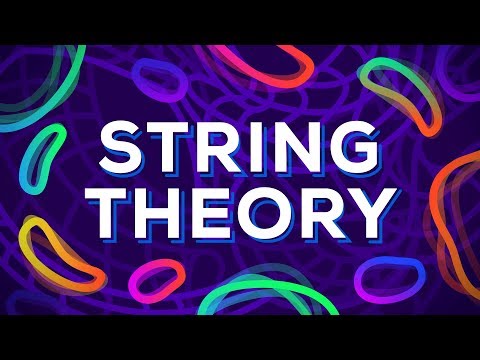
In the 1980s, string theory posited that fundamental particles are actually tiny loops of string, potentially leading to a unified understanding of gravity and particle physics, though practical connections to experimental data remain elusive.
Dark matter presents one of the most pressing mysteries in modern physics.
The absence of dark matter detection in labs signifies gaps in the standard model despite its successes. Carroll emphasizes the urgency of identifying whatever particles constitute dark matter to deepen our understanding of the universe.
Emerging inconsistencies in theories provoke scientific excitement.
Carroll notes that historical moments of discovering inconsistencies often sparked revolutionary ideas in physics, hinting at the necessity for refreshing approaches when current theories yield too many predictable results.
Reconciliation of quantum mechanics and gravity remains a critical endeavor.
Carroll’s vision includes reconciling quantum mechanics with general relativity, unlocking insights into phenomena like the Big Bang and black holes, crucial for advancing the field and addressing fundamental questions in physics.
Ask a Question
*Uses 1 Wisdom coin from your coin balance
Past Questions
Understanding Quantum Mechanics
Quantum mechanics remains puzzling even after a century.
Despite being a cornerstone of physics, many aspects of quantum mechanics are still not fully understood.
Quantum mechanics provides a framework for particles and fields.
It integrates the behavior of particles like electrons and the role of fields in defining forces.
Particles exhibit wave-like properties according to quantum mechanics.
Electrons behave as waves until measured, revealing the complex nature of quantum systems.
Measurement and Probability
Measurement affects quantum systems in unique ways.
When measuring a property of a particle, the act of measurement dramatically alters the system.
The probability concept challenges classical determinism.
Quantum mechanics introduces probabilities in measurement outcomes, contrasting with previous deterministic views.
The measurement problem is still a debated concept.
There is no consensus on what constitutes a measurement or how it impacts quantum systems.
Connections to Reality
Quantum mechanics influences various fields including chemistry and biology.
Understanding atomic structure and behavior links physics to broader scientific disciplines.
Current physics theories cannot fully explain phenomena like dark matter.
While the standard model explains much, it leaves questions about gravity and unobserved matter unresolved.
Emergent properties show complex systems derive from simple rules.
Higher layers of reality, such as chemistry and biology, emerge from quantum and particle physics.
Continued Exploration
The quest for a unified theory of everything continues.
Physicists seek a comprehensive understanding that bridges quantum mechanics with gravity.
Despite technological advancements, challenges in conceptual understanding persist.
Computers may solve specific problems but do not yet replicate the creative insights required in theoretical physics.
Many fundamental questions remain unanswered.
Questions about the nature of reality and the universe's origins stimulate ongoing research and debate.