The Esoteric Side of King Solomon
Summary
This video explores the dual nature of King Solomon, contrasting his well-known persona as a wise biblical ruler with his hidden identity as a master magician and mystic. It delves into esoteric traditions, including magical grimoires like the Key of Solomon, Islamic accounts of Prophet Sulayman's command over jinn and animals, and Kabbalistic interpretations of the Tree of Life. The video examines powerful symbols like the Seal of Solomon, the 72 spirits of the Goetia, and the sacred architecture of the Temple in Jerusalem, framing Solomon's journey as a universal quest for spiritual alignment and divine mastery.
Key Insights
King Solomon exists as a duality between an exoteric ruler and an esoteric magus.
While mainstream religious texts characterize Solomon as the son of David who built the Temple and possessed legendary human wisdom, mystery schools and occult traditions view him as a powerful magician. This hidden side presents him as a 'Sorcerer King' who spoke to animals, commanded demons, and possessed secret knowledge of the invisible realms. These two versions—the public figure accepted by religion and the hidden master passed down through secret societies—have coexisted for centuries.
The 'Key of Solomon' and the 'Lesser Key' are foundational grimoires of ceremonial magic attributed to him.
These texts, though likely compiled in the Middle Ages, claim to preserve Solomon's ancient methods for controlling spiritual forces. The Key of Solomon (Clavicula Salomonis) focuses on purification, planetary alignment, and the construction of ritual tools for invoking angels and planetary intelligences. The Lesser Key (Lemegeton) contains the Ars Goetia, which details the 72 demons Solomon allegedly bound using a magical ring, forcing them to build the Temple and reveal hidden scientific and philosophical knowledge.
In Islamic tradition, Solomon (Sulayman) is a prophet with unique metaphysical authority over nature.
The Quran and Hadith portray Sulayman as a righteous prophet who was granted miraculous powers by Allah. He had command over the winds, could understand the speech of birds and ants, and ruled over groups of Jinn. His power was not just political but derived from a deep, divine awareness of spiritual laws. This perspective reinforces the idea of Solomon as a bridge between the material and the unseen worlds, using his authority to enforce cosmic justice among all living beings.
The Seal of Solomon is a symbol of cosmic balance and spiritual authority over unseen forces.
The hexagram or six-pointed star represents the union of opposites: heaven and earth, fire and water, and the divine and the material. According to legend, this seal was engraved on a ring given to Solomon by God or the Archangel Michael, allowing him to bind malevolent spirits and control the spiritual vibration of the world. It serves as a tool for both protection and personal transformation, symbolizing the inner mastery required to bring order out of chaos.
The Temple of Solomon is a physical manifestation of sacred geometry and the cosmic blueprint.
Beyond its historical role as the center of Jewish worship, the Temple is viewed in esoteric circles as a model of the universe. Its proportions, materials like cedar and gold, and features like the pillars Jachin and Boaz are seen as symbolic of strength, stability, and the Tree of Life. In Kabbalah, the Temple mirrors the macrocosm and the human soul, teaching that building the inner temple through wisdom and humility is the true path to experiencing the divine presence (Shekhinah).
Sections
The Two Sides of Solomon
Solomon is recognized across the Bible, Quran, and diverse ancient cultures as a legendary figure.
He was the son of King David and Bathsheba, rising to power in a golden age of peace and prosperity. Tradition holds that God granted him unmatched wisdom, allowing him to judge his people fairly and negotiate with foreign rulers with high intellect and insight.
The judgment of the two mothers remains his most iconic symbol of clever thinking.
In this famous biblical story, two women claimed motherhood of the same baby. Solomon proposed dividing the child with a sword; the true mother's willingness to give up the child to save it revealed her identity, showcasing Solomon's ability to uncover truth through psychological insight.
A hidden, esoteric version of Solomon depicts him as a master of invisible realms and spirits.
Beyond the Sunday school stories lies a 'Sorcerer King' who allegedly communicated with angels and demons. This persona is the focus of mystery schools and secret traditions, highlighting his role as a keeper of ancient magic and occult sciences.
The Magical Grimoires: Keys of Solomon
The Key of Solomon is a manual for ceremonial magic and spiritual purification.
Also known as the Clavicula Salomonis, this text instructs practitioners on purification rituals, such as fasting and specific bathing, and the creation of magical instruments like wands and pentacles. These must be prepared under precise astrological conditions to align with higher forces.
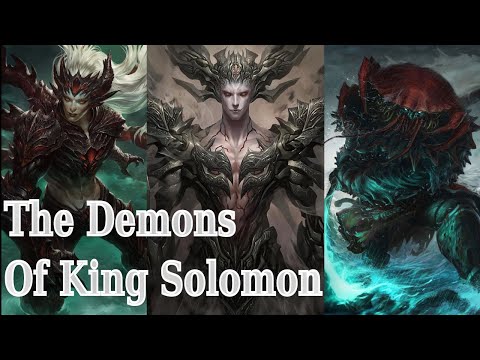
The Lesser Key of Solomon explores the command of 72 specific demons in the Ars Goetia.
This darker text describes 72 entities with specific ranks (kings, dukes, etc.) that Solomon supposedly summoned and controlled. These beings are not purely evil; many possess profound knowledge of sciences, languages, and the future, which they reveal to the practitioner under the authority of Solomon's symbols.
Solomon's magical ring allowed him to control spirits and reveal secrets of heaven and earth.
With a ring engraved with the Seal of Solomon, he supposedly commanded spirits to build the physical Temple of Jerusalem. This highlights the legend that spiritual entities were the literal workforce behind the ancient world's most sacred structure.
Solomon in Islamic and Kabbalistic Traditions
In Islam, Prophet Sulayman had command over wind, nature, and the Jinn spirits.
Islamic lore portrays him as a righteous ruler who could understand the language of birds and insects. His authority over the Jinn was a gift from Allah, used to build palaces and retrieve treasures from the sea, emphasizing that his power was a reflection of divine favor.
Kabbalah links Solomon to 'Chokmah' and the harmonious structure of the Tree of Life.
Jewish mysticism views Solomon as the embodiment of 'Chokmah' (Wisdom), the intuitive spark of divine knowledge. He is seen as a master of the 72 names of God, using these vibrations to alter reality and harmonize the spiritual spheres of the Tree of Life.
The 'Song of Songs' is interpreted as a mystical dialogue between the soul and God.
Rather than a simple love poem, Kabbalists view this text as Solomon’s specialized method of drawing the 'Shekhinah' (the feminine divine presence) into the world. It represents the perfected soul living in harmony with the Creator.
Symbolism of the Seal of Solomon
The six-pointed star represents the perfect union between heaven and earth and opposing forces.
Formed by two overlapping triangles—one pointing up for human aspiration and one down for divine energy—the seal represents the balance of spirit/matter, masculine/feminine, and fire/water. It is a visual representation of cosmic harmony.
The seal acted as a divine weapon and a key in the hands of the master.
Legends state the seal contained the true name of God or sacred letters that vibrated with the power of creation. Solomon used this vibration to seal spirits in jars or protect himself from malefic entities, making it a symbol of protection and authority.
The Temple as Spiritual Architecture
The First Temple in Jerusalem was built as a model of cosmic harmony and divine order.
The Temple was divided into the Holy of Holies, the inner sanctum, and outer areas, mirroring the structure of the heavens. It was designed to be the meeting point between the earthly realm and the divine dwelling place.
Freemasonry utilizes the building of Solomon's Temple as a metaphor for personal self-construction.
In Masonic tradition, the Temple represents the inner work an individual does to align their thoughts and actions with divine truth. Features like the pillars Jachin and Boaz represent strength and stability on the path to spiritual enlightenment.
Sacred geometry in the Temple's layout aligns it with the vibrational energy of the universe.
The ratios and measurements of the Temple are believed to replicate patterns found throughout nature. By following these sacred ratios, Solomon tapped into a divine energy flow, creating a structure that transcended simple masonry to become a spiritual tool.
The 72 Spirits and Inner Alchemy
The 72 spirits of the Goetia represent archetypes of the human psyche and unconscious mind.
Modern psychological perspectives view these bound spirits as fragments of the human instinct—desire, ambition, and fear. Solomon's act of binding them is seen as a metaphor for mastering one's own internal chaos and integrating it into a harmonic whole.
Working with these forces requires extreme humility, discipline, and divine alignment.
The esoteric tradition warns that approaching the spirits of the Goetia out of ego or curiosity leads to spiritual imbalance. True mastery, like Solomon's, only comes to those who remain centered in their higher principles and divine purpose.
Conclusion and Living Legacy
Solomon's narrative serves as both a model for success and a cautionary warning.
Mystical texts highlight that Solomon's fall in later years—turning to foreign gods—represents the danger of power without humility. His story teaches that spiritual grounding is essential to maintaining wisdom and authority.
True power is found in harmony, understanding, and alignment with the divine blueprint.
The overarching lesson of Solomon's esoteric legacy is that human beings can engage with unseen cosmic forces. By building our own 'inner temple' and seeking truth with integrity, we reclaim our role as conscious co-creators of our destiny.
Ask a Question
*Uses 1 Wisdom coin from your coin balance