OCR GCSE Computer Science Paper 2 in 30 mins
Summary
This video provides a comprehensive summary of the GCSE Computer Science Paper 2 exam, focusing on algorithms, programming, and computational theory. It details essential concepts like abstraction and decomposition, standard searching and sorting algorithms, and core programming constructs including selection and iteration. Additionally, the content covers data structures, SQL, file handling, and defensive design. The summary concludes with an overview of Boolean logic, programming languages, and the role of translators and Integrated Development Environments (IDEs) in software development.
Key Insights
Effective problem-solving relies on Abstraction and Decomposition
The video emphasizes two critical computational thinking techniques: abstraction and decomposition. Abstraction involves removing unnecessary details from a problem to focus on the essential features. Decomposition is the process of breaking down a complex problem into smaller, more manageable sub-problems. These smaller tasks can often be implemented as sub-programs, and their relationships can be visually organized using structure diagrams.
Choosing the right algorithm depends on data state and efficiency needs
Different algorithms are suited for different scenarios. For searching, linear search works on unsorted lists but is slow for large datasets, while binary search is much faster but requires the data to be pre-sorted. For sorting, bubble sort is simple but inefficient, merge sort is a high-performance divide-and-conquer method, and insertion sort build a sorted list one item at a time. Understanding these trade-offs is vital for the exam.
Translators (Compilers vs. Interpreters) impact the development and execution of code
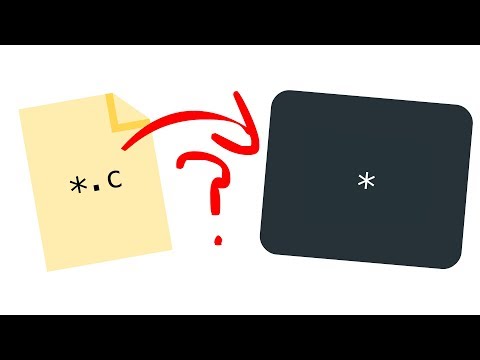
High-level languages must be translated into machine code for the CPU. A compiler translates the entire source code into an executable file, resulting in fast execution and protecting the source code, but errors are only reported after the full process. Conversely, an interpreter translates and executes code line by line, allowing for immediate error detection during development, but it requires the source code to run and is generally slower in execution.
Sections
Algorithms and Computational Thinking
Algorithmic thinking and representation through flowcharts and pseudocode
An algorithm is a sequence of steps to complete a task. Algorithmic thinking involves defining these steps and their order. Flowcharts use specific symbols: ovals for start/end, rectangles for processes, rectangles with double vertical lines for sub-programs, parallelograms for input/output, and diamonds for decisions (Yes/No). Pseudocode is a text-based, relaxed representation of code.
Abstraction and Decomposition simplify complex problems
Abstraction removes unnecessary detail to simplify a problem. Decomposition breaks a large problem into smaller sub-programs or tasks. Structure diagrams help visualize this hierarchy, showing how a project like a social media app is divided into smaller modules.
Using Trace Tables to track algorithm execution
Trace tables show how variable values change during algorithm execution. Tips for accuracy include following every line of code, only updating a column when a value specifically changes, and starting a new row when entering a new block of code (like a loop or selection).
Standard Searching and Sorting Algorithms
Linear vs. Binary Searching methods for finding targets
Linear search inspects items one by one and works on unsorted lists. Binary search is more efficient but requires an ordered list; it works by comparing the middle item to the target and discarding half the list repeatedly until the item is found or the list is exhausted.
Bubble, Merge, and Insertion sorting techniques
Bubble sort involves multiple passes, swapping adjacent pairs until no swaps are needed. Merge sort is a 'divide and conquer' algorithm that splits the list into individual items and then merges them back in order. Insertion sort moves items one by one from an unsorted part of the list to its correct position in a sorted part.
Programming Fundamentals and Constructs
Essential data types and arithmetic operations
The five data types are Integer, Real (Float), String, Boolean, and Character. Casting is the process of converting between types (e.g., using 'str()' to convert a number to a string). Arithmetic operators include exponentiation, division, quotient ('div' for integer division), and modulus ('mod' for remainders).
Variables, constants, and basic string operations
Variables hold values that can change, while constants (declared with 'const') cannot be altered once set. String operations include substrings (extracting parts of a string based on index and length) and concatenation (joining strings together with the '+' operator).
Control structures: Sequence, Selection, and Iteration
Sequence is executing lines one after another. Selection includes 'if', 'else if', and 'switch' statements (useful for branching based on a variable's value). Iteration includes count-controlled 'for' loops and condition-controlled 'while' or 'do-until' loops. 'While' loops check the condition at the start, whereas 'do-until' loops run at least once before checking.
Subprograms: Procedures and Functions
Subprograms are named blocks of code. Procedures perform tasks without returning a value, while functions perform tasks and return a value to the main program. Parameters act as inputs for these subprograms. Local variables exist only within the subprogram, whereas global variables are accessible throughout the entire code.
Data Structures and File Handling
Working with 1D and 2D arrays
Arrays are organized collections of items, usually of fixed length and the same data type. Indexing starts at 0. 2D arrays are arrays of arrays, useful for representing tables, and are accessed using two indices (e.g., array[row, column]).
SQL for database interaction
SQL (Structured Query Language) 'SELECT' statements are used to retrieve data. The syntax consists of 'SELECT' (fields), 'FROM' (tables), and 'WHERE' (conditions). An asterisk (*) represents choosing all fields.
External file operations: Reading and Writing
To save data permanently, files must be opened, processed, and then closed to prevent corruption. Operations include 'writeLine' to add new lines and 'readLine' to retrieve them. Loops often continue until the 'end of file' is reached.
Software Development and Translation
Defensive design, validation, and authentication
Defensive design makes programs robust by anticipating misuse. Validation (like length checks) ensures input follows rules, while authentication (like password checks) verifies user identity. Both are often implemented using 'while' loops.
Testing types and categories of test data
Iterative testing occurs during development (module by module), while final/terminal testing occurs at the end. Test data should include Normal, Boundary (edge cases), and Invalid/Erroneous (wrong type or out of range) data to ensure robustness.
Logic Gates: NOT, AND, and OR
Boolean logic is represented by logic gates and truth tables. NOT flips the input. AND requires both inputs to be true (1) for a true output. OR requires at least one input to be true for a true output. Alternative names include negation (NOT), conjunction (AND), and disjunction (OR).
Programming languages and translator types
High-level languages (Python, Java) are English-like and portable. Low-level languages (Assembly, Machine Code) are CPU-specific but allow for faster optimization. Compilers translate the whole program into an executable file, while Interpreters translate line-by-line.
Features of Integrated Development Environments (IDEs)
IDEs support programming with editors (syntax highlighting, line numbers), error diagnostics (breakpoints, variable inspection), runtime environments for executing code, and built-in translators.
Ask a Question
*Uses 1 Wisdom coin from your coin balance