Human condition | Psychology | Research Starters | EBSCO Research
Summary
The human condition is a multifaceted concept encompassing the universal physical, mental, and emotional experiences of human existence, including birth, growth, pain, death, and a spectrum of feelings like happiness and despair. It's characterized by inherent contradictions and shared experiences across cultures. Explored across philosophy, religion, psychology, literature, and biology, key thinkers like Plato, Descartes, Darwin, Maslow, and Erikson have offered diverse perspectives on justice, identity, motivation, and the quest for meaning.
Key Insights
Descartes emphasized the mind's reasoning power as proof of existence.
René Descartes, a foundational figure in modern philosophy, asserted that the human mind's reasoning capacity is the source of truth, famously stating 'I think, therefore I am.' This established the reality of the mind through the act of doubting, challenging radical skepticism and influencing Western philosophy, notably existentialism.
Sections
Introduction to the Human Condition
Defines the human condition as essential physical, mental, and emotional experiences.
The human condition refers to a set of essential experiences that define human existence, encompassing physical dimensions like birth, growth, pain, and death, as well as mental and emotional states such as happiness, hope, sadness, conflict, ambition, anger, and despair. The concept is broad and lacks a single definitive meaning, often highlighting the dichotomous and contradictory nature of human existence alongside universal experiences.
Examined across numerous academic disciplines and by various experts.
The human condition has been a subject of inquiry in a wide array of academic disciplines, including philosophy, religion, art, history, literature, psychology, biology, and anthropology. It has been contemplated by writers, poets, scholars, scientists, philosophers, historians, and other field experts, reflecting its pervasive relevance.
Historical and Philosophical Perspectives
Religion offers early perspectives on human experience and salvation.
The human condition was initially explored through religion, with Buddhism viewing life as a cycle of suffering and rebirth, escapable through the Noble Eightfold Path. Christianity, in many traditions, posits humans are born into sin and can achieve redemption through faith in Jesus Christ and sacraments like baptism.
Plato explored justice and ideal societies in 'The Republic'.
Ancient Greek philosopher Plato explored the human experience in 'The Republic,' a Socratic dialogue focused on justice. The work examines the current justice system, proposes utopian societal ideals, and assesses humanity's capacity for justice within the context of the human condition.
Descartes emphasized the mind's reasoning power as proof of existence.
René Descartes, a foundational figure in modern philosophy, asserted that the human mind's reasoning capacity is the source of truth, famously stating 'I think, therefore I am.' This established the reality of the mind through the act of doubting, challenging radical skepticism and influencing Western philosophy, notably existentialism.
Hannah Arendt examined historical perceptions of human actions and their impact.
In her 1958 book 'The Human Condition,' German existentialist philosopher Hannah Arendt analyzed how human actions have been perceived throughout history and their consequences on the world, also offering her own interpretations of the meaning of these actions.
Interdisciplinary Exploration
Literature reflects on human existence, transience, and leading a full life.
Authors and poets have long contemplated human existence, its inherent positives and negatives, and its transient nature. Literature often explores how to live a full life despite human finiteness and mortality.
Darwin's theory of evolution posits ancestral human connection and natural selection.
Biologist Charles Darwin's theory of evolution suggested humans share a common ancestry and introduced natural selection. The phrase 'survival of the fittest,' associated with Darwin, significantly altered the scientific understanding of humanity and influenced sociology and philosophy.
Maslow's hierarchy of needs classifies universal human motivations.
Abraham Maslow's 1943 theory of the hierarchy of needs, based on developmental psychology, categorizes universal human motivations into five levels: physiological, safety, love/belonging, esteem, and self-actualization. This theory is central to understanding human drives.
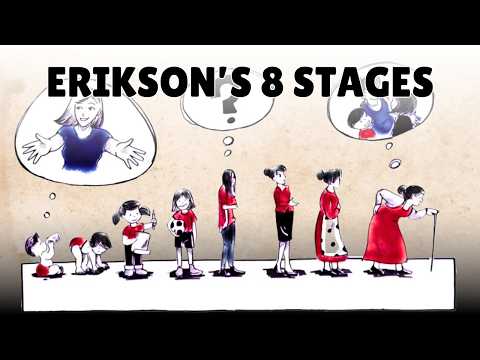
Erikson's concept of 'identity crisis' addresses psychological development.
Psychologist Erik Erikson coined the term 'identity crisis' to describe individuals lacking a solid sense of self, purpose, and belonging by a certain age. Both Maslow's and Erikson's theories underscore the human quest for meaning, informing mental health treatments.
Ask a Question
*Uses 1 Wisdom coin from your coin balance
Watch / Source Article
Human condition | Psychology | Research Starters | EBSCO Research
Read the original web article directly on ebsco.com
Open Web Note Link
![The ENTIRE History of Human Civilizations | Ancient to Modern (4K Documentary) [Full Movie]](https://i.ytimg.com/vi/ha1NneZGm7A/hqdefault.jpg)